Trains of Honest Thought

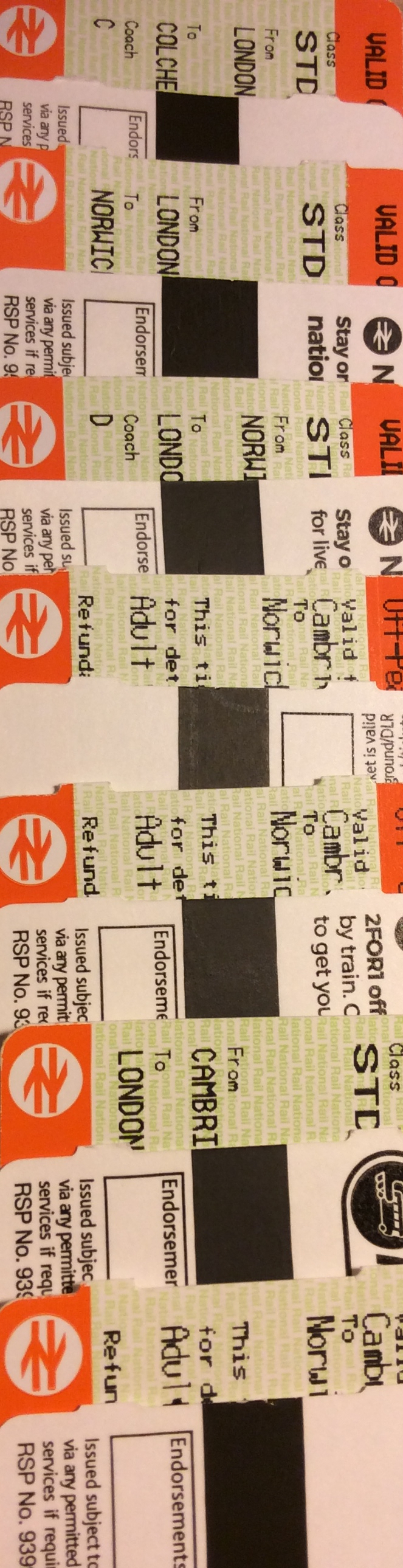
My experience with honest writing is rather commonplace. I will often (but, not always) write the most honest words when I am on a train or a plane. I will get the idea in the shower or when I am doing my dishes. Movement and transitory moments are loud and crowded and sometimes the most solitary and creative. Transportation, in this sense, can be a magnificent reflection on privilege; a place where movement is not a loss.

Honest writing happens during showering. Warm water evaporates and returns replenished: an image of its own possibility. When I write most honestly, my eyelids feel dry and heavy, and my typing rings with a mechanic quality. I am not sipping on tea or gazing out of my window. Maybe someone else is. But I am arm deep in dishwashing bubbles and scrubbing a pan when I think of that which could be written.
Honesty and grief are two topics that are very close friends and spend most of their time together. They are the ones drinking the tea instead of me.

Grief is often a situational experience for me. I always wish for grief to be honest; to explain itself. In turn, I try to demonstrate the ways in which our relationship is like that between me and honest writing. I accept the effort that needs to be put in on my behalf. In return, I ask for the opportunity to do so.

Honest grief lives in the realisation of the things I see myself as incapable to do. Or, rather, it is caught between the moments in which I begin to believe that the object of my grief could have shown me how to do things better. That which I have lost would have dealt with the situation better than myself. In these moments, I get a glimpse of an object which is steeped in the grief itself. A thing of warmth, like laughter, and I am set in a process of searching through disorderly moments of the past for a more tangible experience to bring me closer to the new feeling.

This grief, although lacking in a clear definition, is honest. It speaks in the language of needing to cope, and not in terms of detachment. I think of the person’s favourite books; perhaps, I can read something that revised their understanding of the everyday. If this does not work, I could emulate their handwriting style so that my words, even in appearance, can form an attempt to resemble their own.

The grief of these needs seeps into me involuntarily because of their honesty. They have not yet seen themselves dressed in retrospective tulle and silk. I have not met them in official attire. Our encounter has been utterly informal; they have seen me do the dishes.

I have been writing a piece on my grandmother. It is taking time. And I thought I would not post anything for a while because it didn’t feel like the right time to do so. I do not think that it is necessarily a good thing to wait for the perfect moment to write. As most people know, these instances are deliciously rare, and you will not get your degree if you wait for them. What I’m getting at is this: although I did not want to write anything before I finish the piece I am currently working on, I would like to celebrate and applaud my own moments of writing spontaneity.

Sometimes, in order to write, I need to take a lot of time. In these moments, I sit on my chair and feel the texture of the thoughts once they have settled. Only when I have done this can I expect the words to cooperate. Even then, they often form sentences in fragments, to be constructed and deconstructed in the process of editing.

Most of the time, these will, in fact, be the best pieces I write- I know this. Pieces well researched, well thought out, with both time and planning invested in them; the obscuring clutter around them is tidied up and put away. Yet, there are other times when writing can feel incredibly honest to me when it begins on the train, or next to the kitchen sink. I will clean it up in the end as I would the others, but it will be stained with soap marks that do not go away.

These are fleeting moments which move me in writing and in grief. They consist of the matter which gives writing a human voice.  Together, grief and honesty web an authentic mess that spreads and links the iPhone keyboard with overwhelmingly personal feelings. Like this, I see the words hold hands with grief.

I am on the train, and, in all honesty, my eyelids are too heavy to keep open any longer.
On influence

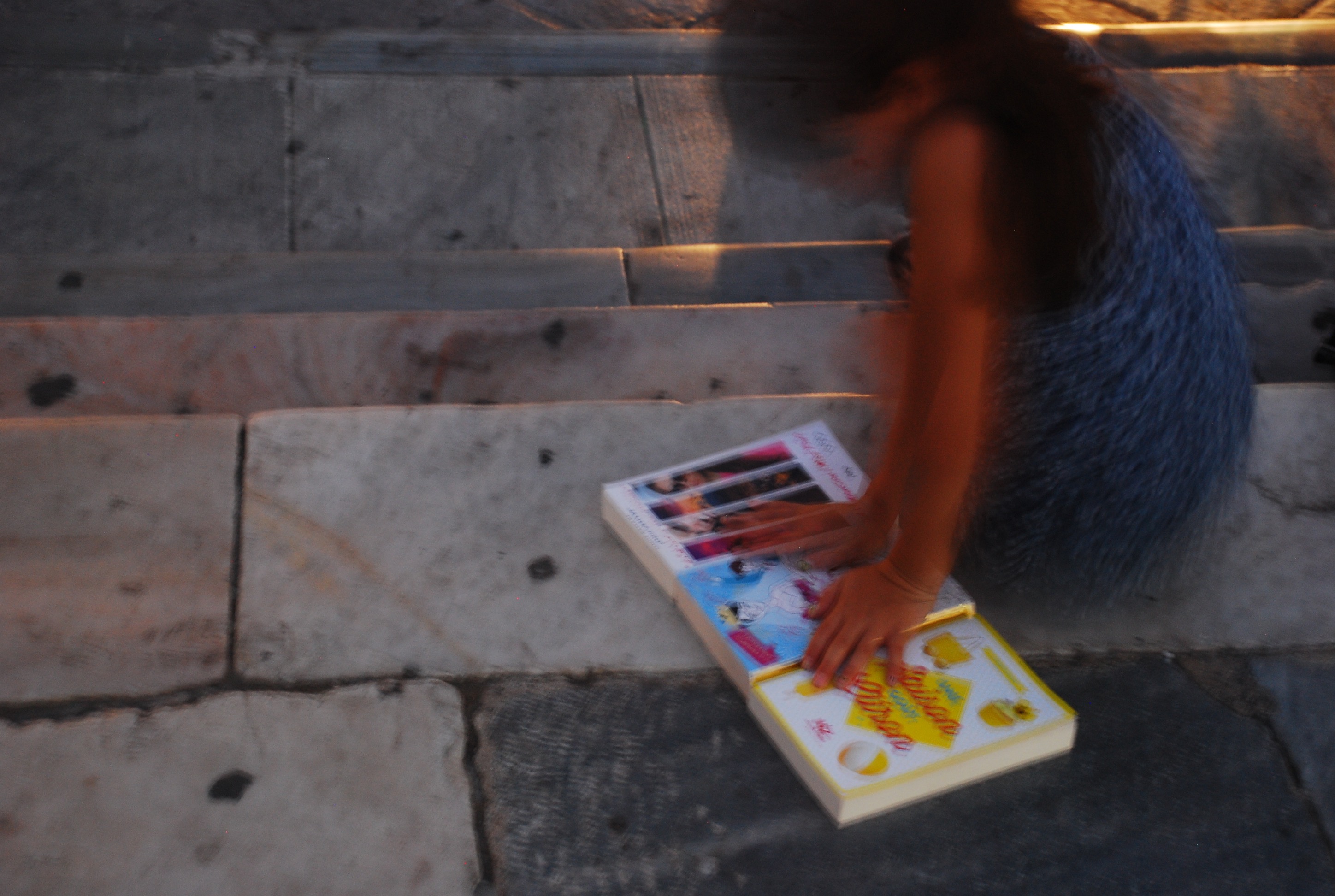
Little girl and her books
Ερμούπολης Σύρου 2017/ Ermoupolis Syros 2017

When I was around ten years old, we went on a school trip that is significant for me to this day. As part of an assignment, our teacher took our class- the prestigious Year six, oldest of the youngest- to an elderly home. This prospect was exhilarating. It meant I could attach the stories of entire life times to people who had the capacity of having lived them. Even the idea of this roused in me the deepest sense of excitement. It seems comical to describe my ten-year-old anticipation in this way; retrospect coats colourful childhood memories with its elaborate new descriptions.

We took the bus there. The details packed around this quiver and ring present to this day. When we arrived, we were assigned a small group of three or four, and accompanied by a resident who would show us around their rooms. My group followed a man who was as eager as me to be listened to; I felt attached to him. He told me some details about his heritage. Regardless of what he had chosen to talk about, I felt a great sense of comradeship with this person who was willing to share his story with me.

We sang with the residents, or performed for them; this memory has been worn out. The trip left a lasting impression on me. This was all part of a class exercise: we would write about our experience. I felt so proud to be at home when it came to writing. I was not ashamed or reserved for my writing or of the pride that accompanied it.  It did not occur to me that my words might be the ones used by my classmates who wrote about similar experiences. If someone had told me that the boy next to me was describing the same man using similar words and expressions in his work, it would have meant nothing to me.  My writing was mine, untainted by questions of storytelling and ownership.

Sometime in the same year, we went on a holiday visiting parts of Spain, France, and Italy with my parents. My teacher had asked me to keep a diary. Most evenings I tucked my chair close to the desk in our room and wrote in the little black book with the strap. I’ve read it since and it strikes me that I did not fear detail or repetition. This small, private freedom indulged me in small pockets of creativity.

Studying at university has made me hyper-aware of the similarities between my writing and that of others. It is a routine to find myself tracing the influence of other people’s writing in my own thoughts; before I write them down they are censored. Don’t get me wrong, I think that being aware of the influences behind different aspects of your writing is a crucial aspect of originality. And, of course, I am not encouraging copying, nor do I believe it is an honourable practice; crediting those whose ideas you are using in academic writing is a core and extremely valuable practice. I am speaking, rather, of the censorship that seeps into the flow of creativity when I become vigilant of those who motivate my own creative pieces. It seems self-evident that influence occurs. Especially as a Literature student, it is more than often that I will find myself echoing the tone of the author(s) whose work I am analysing in my own essay. I am aware that what I am describing is not considered copying. That is how it goes. You read someone great and then you mirror them and that is fine.

Logically, it makes all the sense in the world. Nevertheless, awareness of influence translates into censorship when it seeps into my creative writing. In that realm, it feels different to see the voice of another in your own. When it is a personal piece in which you hear the last book you read colour your tone, it feels unoriginal. You feel like a cheat. I will not try to analyse where this stems from. I have no idea. What I do know, is that I have observed in creative writing as much as in literary criticism that young writers like myself are afraid of starting from the start; of being beginners. This process implies that your voice will carry strong aspects of those that you enjoyed reading or others that have influenced the way you think. In learning to write, we will have to learn to be okay with this; to value it, even. Someone has said that we are afraid of being beginners, I know. Someone must. What was their name again? Influence is infectious.

Then, so much is thrown into the gutter of ‘I have worn this out’. There is a certain fatigue that follows the aforementioned process. Thinking this way about writing, tracing obsessively the influence of other’s work in your own, defeats your will to write and be expressive. It does it to me. I do not want to write about singing with the residents, the story exchanged with the man, or the process of retelling the events. Someone must have done it already. I have thought about it for too long. Following this dizzying train of thought makes you hide in your room with a piercing headache, while your friends sit outside and discuss their pieces, giddy with the scent of someone’s influence running through their own. Maybe, it is worth unpacking why you feel that you will enjoy your piece more when it is finished and you can look at it as the final product.

This particular piece does not end with a suggestion or a solution to this. Someone has one already, I’m sure. But it is worth telling you that I long for the days where I could write about our day in Florence or the old man. He was not only Turkish. He was Turkish and Greek. What is the word for that, again? Someone had told me.

Four feet of grief

DSC_0322.jpg

After listening to Adichie speak on the ‘Danger of a single story’, I remembered the importance of a story in the centre of my thoughts. The way it cracked open like a nutshell well hidden from my grasp, pouring out the important detail that makes any experience comprehensible. My time of grief sits arched amongst the others; its long, strong limbs spread between four distinct periods of my life. Between being stuck and growing faster than it was possible to trace, their echoes resonate amongst themselves in times of longing, despair, confusion, and rebuilding what was never lost. To force myself to remember has become my objective for a long time, as the fear that I no longer hold their firm memories in my hands overcomes me every time. It is difficult to lose the memory of losing and being lost. The understanding that underlies all of the periods that are colonised by grief is that they are shared amongst the experiences of many others who have walked through similar situations. Perhaps there comes a time that sees this experience fully explored through repetition and singularity. But, excuse the repetition; I have come to accept that if I will write about this I will have to do so in a manner which will help me come to terms with the memories I have thought of myself as inadequate to occupy.

My brother was born when I was six years old. This happiness rings of baby milk and endless petty jealousies. It also brings to memory the germs, the fear which began and never ended. The word ‘fear’ was not as apparent as the word ‘wrong’. I washed my hands religiously because I was afraid. I saw the fragility in his veiny forehead, his powdered, translucent skin. How can something so unaware stand at the forefront of so much fear? I barely breathed around it. This grief spreads itself throughout the others; the fear of hurting. Panicked calls home, the palm of my hand moving between me and the object of infection to pull up a barrier; constantly stirring, never succeeding. Getting used to the whites of eyes, the white of teeth, all gleaming with mockery. Periods of calm followed by awkward movements of the body attempting to dodge the intrusive thoughts. Rude guests, always in my mind, spilling their tea leaves on me as if I invited fear to make me its permanent home. This period is all in retrospect, pulled out in clumps: as long as it is present I will narrate it as the past. The first grief was powdered milk and antibacterial hand soap.

We moved to Istanbul when I was eight years old. I had no picture of the city. The richness of colour and smell, money and the lack of it, overwhelmed me. The old meshed with the new felt like a recently bought coat, unworn and warm; soft to the touch. The loss of leaving home behind was tinted and exciting. I remember leaning on the ledge of my window, from which I could see a playground of a school located near my home. The brick coloured parquet sprang up stories of other children who grew up with the skyscrapers in near view. Their friendships would last a life time as they already had in comparison to the ones I had made and lost in the process of moving countries. Loss smelled of a clean white pocket square I had asked my grandma to give me. It sat in one of the plastic files of a grey folder in which she had incorporated a collection of satirical cartoons from the newspapers she read. I would recall then the times we had read those cartoons together, the sting of past laughter cutting with an edge sharpened by my vibrant childhood imagination. Magnified memories were experienced without the impulse to compartmentalise. Loads of sniffing of the clean pocket square, looking for the edge of the plastic sleeves to turn the page. Each image of satire would bring the welling of tears. I would tell this to my grandma on the phone, only to hear her voice: ‘I put those in so you could laugh!’ But she never mocked me. She listened and filled the corners of my sadness with the clichés and practices which made the experience bearable. I looked at the moon as she told me to, believing she was looking too. My second footstep of grief is on the moon.

The third grief had a face with cheeks full of life. Cheeks rosy and eyes blue, and the warmest hazel you have ever seen; my mother. The third step of grief was in the room with the box, the air thick with three presences. Steps towards the box, the screams I need to discuss three years later, and then acceptance. Gradual, cold knowledge of reverse time, grief thick and slow. Every time I looked into my father’s eyes we were both looking into the same face. This grief smelled of old gardenia and orange bricks: construction of memories and decomposition of fear. It was not the rosy image of tears and holding hands. It was learning to speak to each other about deep discomfort, shifting our body weight to find a balance thin and worn out. It was the blue and pink marks turning nude in the face of an audience who offered their clueless support. The loss of immense presences pervading the extreme movement of our lives. It was tears, rare and welcome. Release from the repeated routine of forgetting to move on. A very heavy baggage that always seems empty in words. Kicking and screaming before moving and dancing was the third step of grief.

The last step of grief, for now, is moving and leaving behind. Nostalgia rings like the sound of my fork tossing back and forth the remnant crumbles of feta I bought from Tesco.  The clink of my dishes in the sink rings of my grandma’s trembling hand as she serves you some more fish. But I have felt nostalgia before I tasted it: as soon as I set foot on the plane I realise I am driven out and away through clouds more confused than me. A constant state of wishing to leave in wishing to stay cycling my mind like my twelve-year-old brother through the streets of home. They stole his bike last winter and I was not there. The three weeks I tread time always erode away into cramps of leaving behind those others I walked on sand with during those scorching afternoons. I know to wish for nothing more because my home may be elsewhere but at least I have embedded its details in me. Don’t forget to soak the lettuce in vinegar to kill the germs. Make lentils now and then. Home is grey in black and white- spikes of representation. And my eyelids mirror it all, aching with the light and wishing for nothing else but that. The fourth face is tired, like those I leave behind. This grief is spread most geographically. I trace its outline from wherever I find myself in wherever I am not.

All four steps leave complex imprints that are better written before they are quickly let go from fear of loss. I have not dared do this before, but here it is. Retrospect gives the strangest shades to grief. I am willing to accept this.

The language of our memories

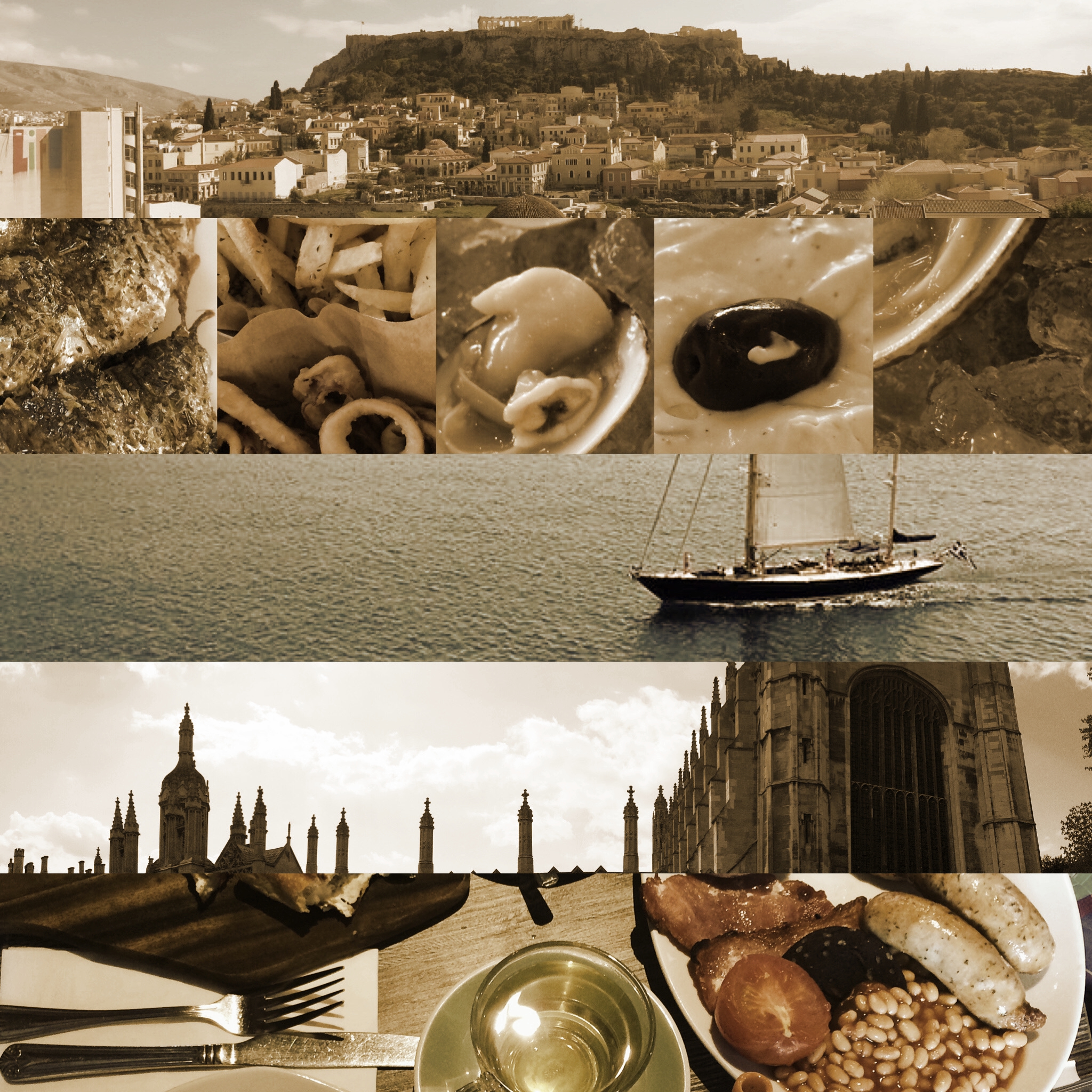
sepia.jpg

I write this from what used to be the location of my parent’s bed, now my grandmother’s spare room with the twin beds. She kept the sheets on from the past time I visited, a week ago. I surprised her and she told me ‘I knew you would be here again’, and the undertone was hope.

I get in the all- but-cozy position of remembering all you would on your grandma’s twin beds with the strange covers imitating some really odd, familiar form of modern art. The photo album we flipped through with my cousin last week colours the process; I recognise this without interrupting it. ‘I’m okay with this’, I tell no one.

She comes to me through a conscious process which I will be okay with being intentional. I need this one to be lived. She comes in the sepia films. Little white dresses worn at the age of four, five, six. This time, she reminds me of a parcel of sweets we hand out during baptism ceremonies in Greece. It’s a cultural thing, I think. I don’t know the English word, but it doesn’t matter, I don’t need to know it. Maybe you do, but it will be so empty. We can’t do it like that. It’s called ‘μπομπονιέρα’. That’s ‘mpomponiera’, for you.

This is very vague. I give in to the need for explanation. The words ring in my head in the expected language: English. The intention to express plays out as the inability to do so. The language, the pictures, are all next to my mosquito bitten legs, and they could not be more foreign in their strange, new English shoes. They tread all over the intention, really! Here it is, an experience honest and foreign. These pictures of the pale little girl, plump and rosy, are too sepia, too detached.

This life I needed to see is in film, old as well as aged, and in Greek. I imagine it in the present, as a story, told in my new, brightly coloured English. It could not be farther than the plump mpomponiera. That child in pale stockings did not speak my language. It didn’t think of itself as a story. It is now, but mute; only my voice is heard.

My father’s mother was there when I competed in a school competition for the spoken word. I spoke of the power of stories in a language she did not understand. A mute world apart, her and I looked and recognised each other in every word. But, the experience, loaded with emotion, was indeed mute. I trace the guilt through the memory. I didn’t explain to her. My time, not sacrificed, left me mute. Her time was spent absorbing the story I might tell, about stories.

This barrier is complicated but comical because of that at times. My mother imitated a turkey in a grocery shop. We had recently arrived in Istanbul. She was trying to ask for deli meat. The man knew. He got the message and the meat. She took it. Both were thankful for this encounter, for the communication. No language barrier could render my mother silent when in need of Turkey slices!

Once, sat at a place with zesty lemon cheesecake, in one of the city’s most cosmopolitan shopping malls, the waiter said to her ‘Afiyet Olsun’. She came home and told my dad, ‘Giorgo, I must have looked German to him.’ To my mother, this was German, more foreign even than Turkish. We all laughed about it when we found out it meant ‘Bon Appétit’ in Turkish. I still laugh.

I grew up in a house where I considered as a great personal feat to get my family to speak a broken form of Greeklish. It was, considering the strict rule of ‘Greek only or you’ll forget your mother tongue’ I had to bend in order to achieve this. English became first in a matter of years for me. First choice, first language. Now, I think of how I called my mum ‘μαμά’, ‘mama’, and my thought goes ‘I want to say μαμά again’. In itself, the phrase speaks so honestly of my experience with mixed languages. My memories are tinted with Greek and expressed in English. The filter is the sepia we have on VSCO, the film is from the neighbourhood print shop. Part here, part there. Part Greek, more English, all mine.