Sizes of empathy

IMG_2301

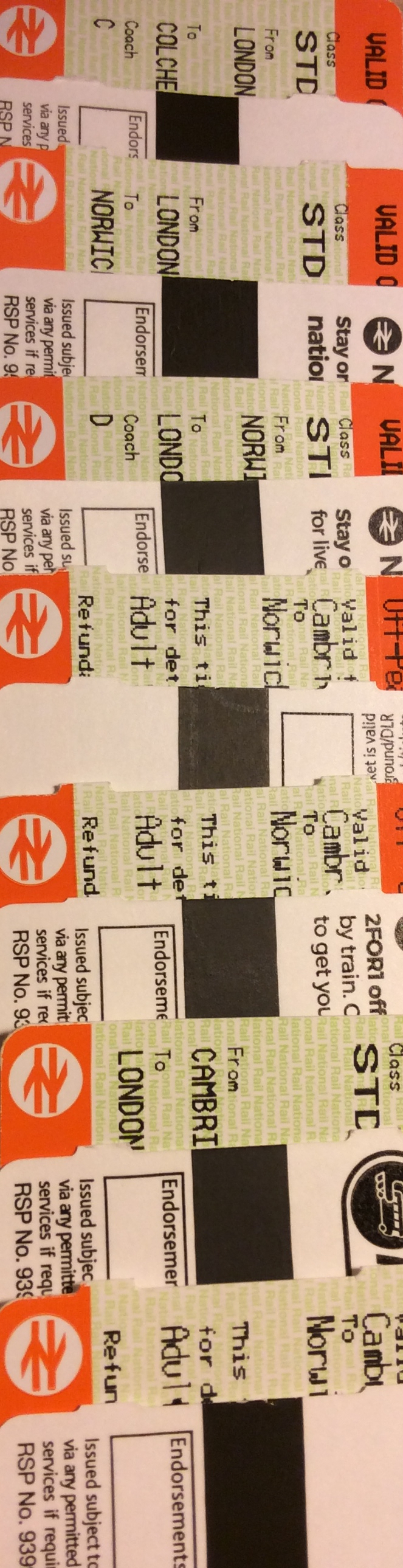
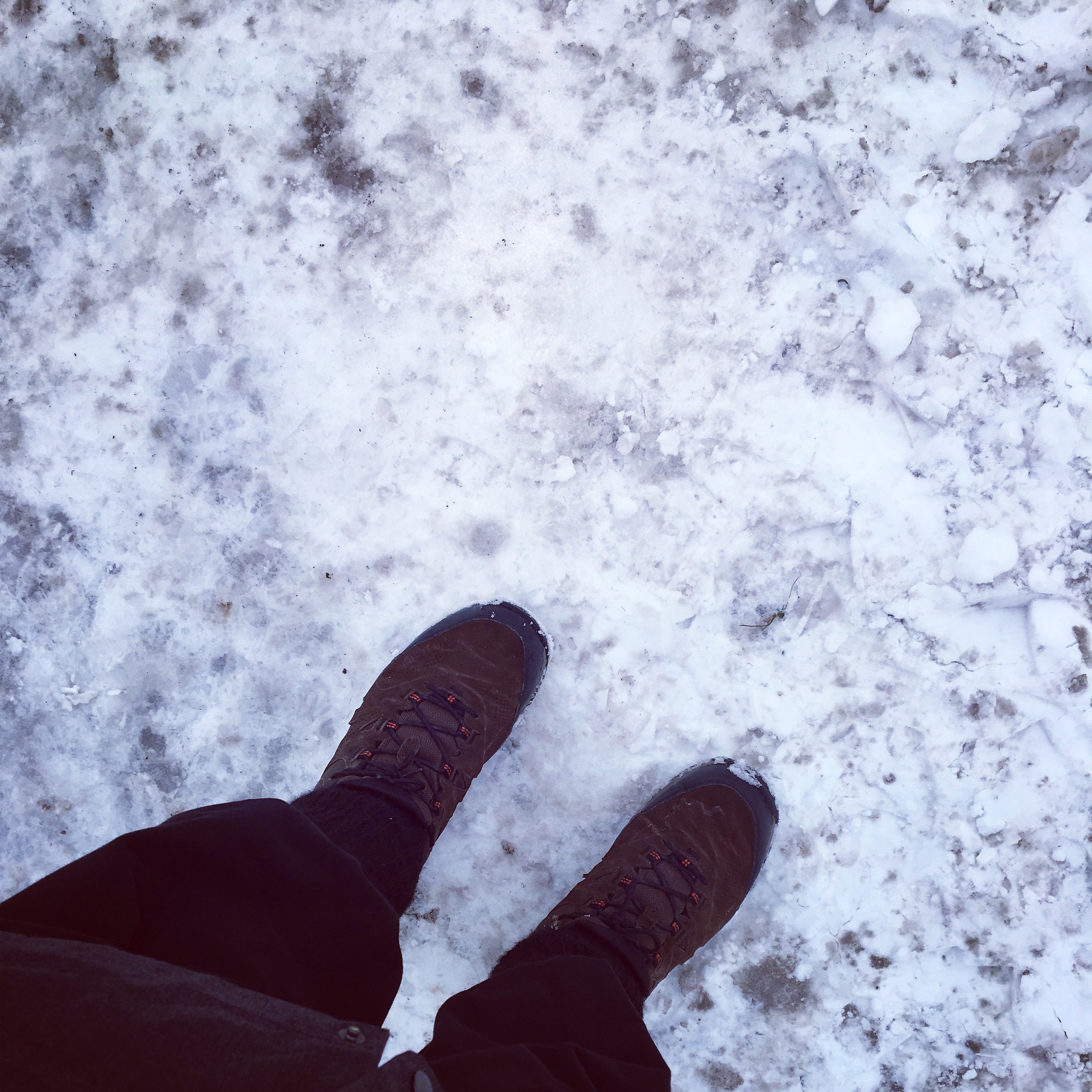
Easter holidays in Greece are the perfect time to write. Unlike the picture above, taken only about a month or so ago in icy Norwich, I can sit in our garden, and stare at an empty word document as long as time permits. My creative process if fuelled by Greek weather and Γεμιστά (Gemista), which, for those of you who don’t know, are stuffed tomatoes and bell peppers that truly make one believe that foodies have it better in life.

Seated in the garden, rested and ready to write, the page remains empty and I pack my laptop up, and head inside. I’ll write later- after a few days, a nap, a long walk in the centre of Athens, a few too many episodes of ‘Easy’ on Netflix, a myriad of internship applications (and a packet of Oreos), under the familiar artificial light that makes me wish I was a morning person. It’s comforting that my laptop is still running on U.K. time…

I am always trying to wrap my head around what it means to have empathy. I have, on occasion, known empathy to be an awkward experience. As you grow into and out of your loss, times in need of empathy are filled with words that are too heavy in their own hollowness. It feels like trying to handle a stuffed animal that is too bulky, making it difficult to lift and carry around, much more to hand over to someone who needs to be comforted. Here you have these experiences that fill up the room, the whole house, and people cannot find a single thing to say that can help in cleaning up the mess. I’ve come to realise that we demand of people to be empathetic in a certain way that we deeply need. In my experience, the trouble is that often empathy is so much more about the empathizer than about the person on the receiving end. For this reason, as a person who has been (and hopes to always be) in both positions, it is so difficult to navigate the topic of empathy without being critical of myself and of others- which is, paradoxically, the very thing that must be done.

As a person grieving, I have felt the many textures that are traced through the experience of needing to feel empathy. I have felt that grieving is not a flexible process. I have felt like certain words needed to be stitched through a very specific part of the tear, weaved in with waves of a particular person’s voice. I have felt what it means to expect this precise version of empathy and not receive it. Often, the voice that came was not the right one, the attempt fruitless, at the wrong time, not in the shape that fitted my size of grief. The realization that people do not always carry your shape of empathy is unsettling; to discover that you too are prone to leaving others barefoot in the face of their pain is even more confusing. Grief is unstable as it is destabilising- an evolving experience in which growth and immobility are concurrent processes. In the face of empathy, we are all children outgrowing their old shoes faster than our parents can afford.

I tell my friend that I think of my experience as one that is split down in the middle, at a strange angle. Ironically, my words come out as if I can see a clear before and after. ‘What do you define as post-grief times, then?’, she asks as we are perched up on my couch. I smile because that is a very perceptive question, perhaps unintentionally intimate. It’s one of those questions that catches you in a personal moment where you are carefully balancing your reality between distinctions- then and now, ‘pre and post grief times’. This imagined reality is miles away from the one I have felt. It is my experience that loss lies one moment in feeling your grandmother’s soft hands, and the other in walking past the launderette where someone is washing their clothes with the detergent your mother used at home when you were a child. One day your life is dominated by these moments, and the other, still learning how to move again, ready or not, you must run over to someone who needs you more than you need yourself. The distinction is blurred. Empathy becomes a rope of which you can see both ends, and both are tugged at to stabilise both yourself and the person on the opposite end.

This past year has seen people I love in loss. Barefoot, I am trying to navigate the game of empathy, and I am full of blisters. I say the wrong things, feel myself questioning when it is right to break the silence, send a message, call, knock on the door. I am an unexpected visitor in someone else’s sadness, and it can be so uncomfortable. What are the right questions? Wasn’t I supposed to know some of this from my extensive experience in the field of grief? And, at the same time, I ask: am I not the person who stresses the individuality of each experience?

In realising the fragility of these situations, I am choosing to ask questions without treading over them with my own assumed knowledge. I promise that I will always take my shoes off in your house if you will let me in.
Featured

‘I have been loved too well’

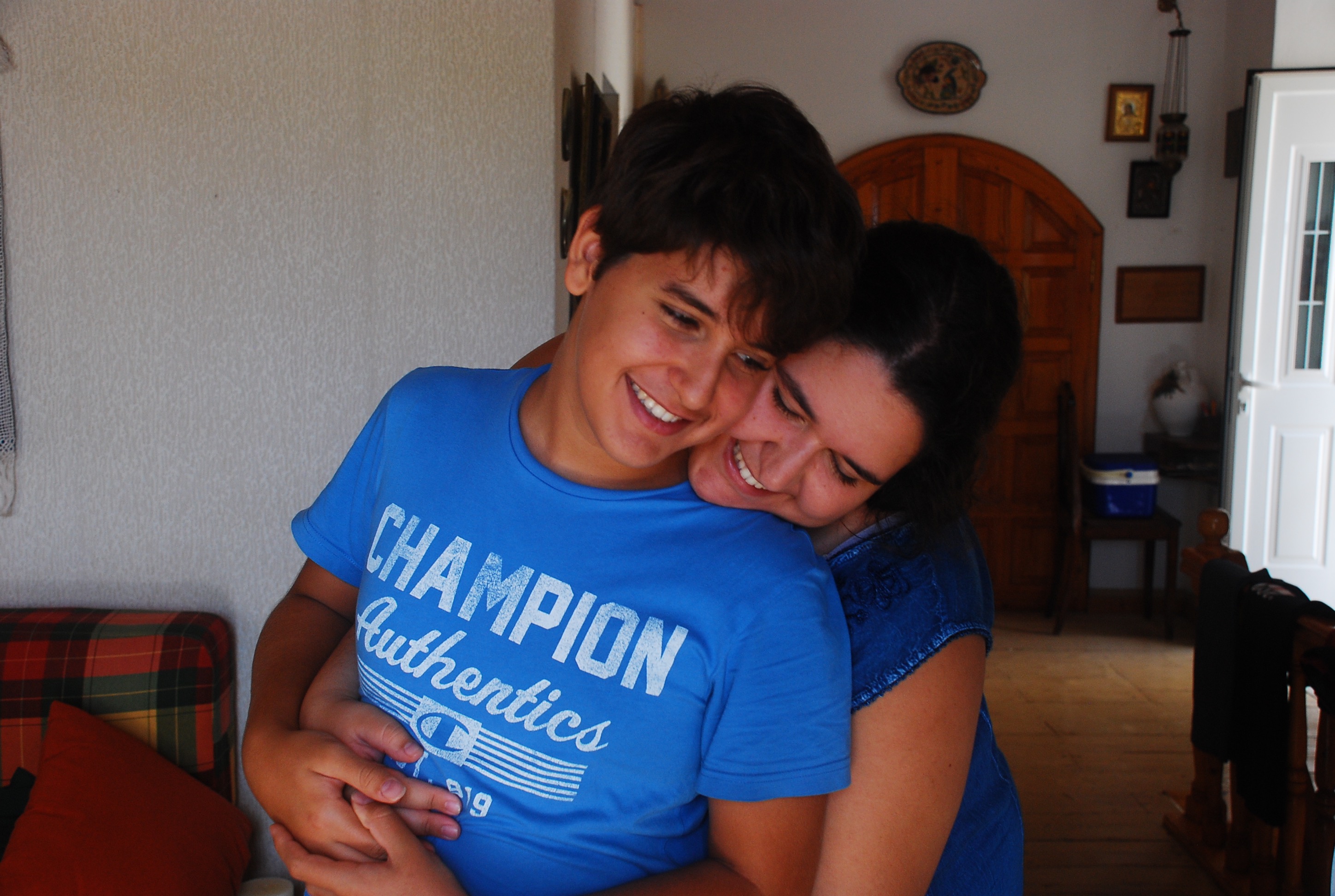
With my brother

Sitting with my friend across our scratched kitchen table in our Norwich home, we talk about crying when we are alone, for our past and present selves that have been hurt- are hurting. In what seems to me a deeply honest set of joyful tears and painful laughter, the sorrow coated, strange-looking words are dropped on the table: ‘We are healing, Melina!’

Months later I am listening to my favourite podcast, Dear Sugars, and Cheryl Strayed discusses how recovering from the darkest period of her life, she nurtured herself back to health, did not let herself be swallowed by the severe presence of grief. I quite literally stop in my footsteps as I hear the phrase: ‘I have been loved too well’.

She explains that the reason she chose the path that, to her, represented healing, was because she had been loved too well to let herself go. Her mother taught her how to love herself well. I have one of those moments where everything overwhelms everything that sits comfortably posed around it. In one warm Athens evening that welcomes mosquitoes, I am so demandingly reminded of all the times I have cried for myself or thought of myself when I have needed to cry.

I cry with simple, soft things. I cried as my therapist told me I needed to treat myself kindly. I cried when I thought of how my mother put me to bed with stories. I cried when I heard on YouTube the story she would play on the CD player that was placed on my bedside bookcase in Istanbul. I cry as I construct the personal metaphor of myself being nurtured back to health. I cry as I realise I might be missing something that I will never be able to have- I cry as this realisation hardens into a truth. I cry at the thought that I had to grow up abruptly, at a capricious command. I cry at the thought that I didn’t; that I was taken care of so well in pre and post grief times. I cry so often speaking to my father about building things- over, again. I cry on the bed, and I really wish I could cry in the shower, but I cry. And when I’m done crying, it clicks: I too, was loved so amazingly well; I too, was taught how to sprout back.

And yet, ‘too well’, taken completely out of context, is weighed with some other meanings. Family members, as it goes, commented on the way my parents raised me. Strangely, they commented that I was given too much love- as if love is stored in mason jars- tightly sealed with a ‘use by’ date on the lid, and nutrient information on the back. What a strange idea- that a child can be loved too much, cared for too well. They told my mother to read me fewer stories at night. They told her that I would grow up to be spoiled.

My mother’s response was to read novels to me. My mother’s response was to walk in the snow to take me to ballet and swimming class- she was on the brink of bursting, her belly swollen with my brother. Her response was to send me books about how babies are made, and a massive, soft teddy bear that I later developed an allergy to, from the hospital ward- she was sick with pneumonia and about to give birth. My mother’s response was to have close relationships with all my teachers- she wanted so much to tap into my thirteen-year-old attitude that spoke so much and revealed so little. My mother’s response was to do all this but also warn me that I must never judge anyone because we are one inch away from becoming the other.

And I was so content, and sometimes so desolate; I felt it all so acutely. I knew that her response was to grieve for me more than I was grieving for her.

My father’s response was to hold our fifteen and nine-year-old hands that in a day were covered with wrinkles of a special kind. My father’s response was to give us significant promises for a future that we thought to have seen buried with our own four eyes. My father’s response was to listen to me endlessly as I sat on the edge of his bed and felt so much, all at once. My father’s response was to take me to all the doctors you can think of; any professional that could help- it was so difficult to help, even harder to be professional. My father’s response was to say all the words that were needed, to give all the hugs that, if missed, would have left the gaping, grieving wound developmentally exposed and emotionally infected. My father’s response was to fly to Thessaloniki during a competition. My father’s response was to give every last second of the short hour to patching me back into a functioning quilt. And, now, I still feel it all so deeply; and when I don’t, I know what it means to be able to.

And what were they responding to, my parents? At its core, to the way I needed to be loved; softly, like a patchwork quilt, like ballet lessons in the winter or giant, dust collecting teddy-bears, and novels read out-loud.

A lot of my writing reads like a tribute to my parents. This entire post feels like I am trying to fit the history of my person in a sentence- a ridiculously absurd, non-existent- possibility? I feel the closest to that that I have ever been tonight. I feel that the closest I will ever get to that one sentence is to say, ‘I have been loved too well.’ That is, so well. I have been loved so magnificently, so I allow myself to be all at once the person who acknowledges the double reality of what it means to cry for themselves.

It is not self-pity; it is self-love to be, quite frankly, painfully honest with yourself. And, in this way, I am rather suddenly reminded of the humanity I am learning by loving myself to health.

Space for raspberry tea

DSC01461.jpg

A small tribute to mental health day. I think it is important that we honor in our writing not only the composed, thorough thoughts but also the moments of disorientation and confusion.


I have felt it-

The chest sitting ear splitting-

Have you felt pressure that says

You need to have an important

Conversation?


It asks you to sit on your bed

Have you emptied it yet

Only a moment ago

To sleep on.

You

                                                                           Are not sleeping.

Going to university is defined by possibility. We leap from the extraordinary angst of teenage years into the anxiety of realizing potentials. We are surrounded with an exhilarating energy of learning and innovation.

It tells

You that you


Need to

Work it out

Because you have not

 Finished your reading again.

I have scheduled

Even my meals

In my head

Even my

Sleep

I do

Not sleep much

At times, even possibility can be cripplingly exciting. Suddenly, there is endless room to discover. Occasionally, it feels as if there is too much room. We are not used to keeping ourselves upright in such a large space of opportunity that does not come with step by step instructions.

Anymore.

It taps its branches

On your knee

They tap like frantic laughter

They cook your scheduled meals

They have turned your pages

Haven’t they

They have pierced your time

And laughed


You laughed

At the papers on your desk.

We lapse into comparison. Small anxieties feed on our self-assessment and they mature into feelings of inadequacy. It is not necessarily a crippling sensation. To be in a constant race with everything is part of the process, and you deserve slightly off-budget raspberry tea if you make it through the week without crying.

It asks the questions

Why do you so need to create?

And be rewarded

Am I not enough

Have I not pushed you am I a failure?

You have

But I need my own pressures too

You understand

Don’t you?

If we did not keep ourselves awake at night pushing for a few hours of extra reading or researching graduate degrees we would not be initiated properly into the adult world which we have only experienced through washing our clothes and buying fresh bread.

Don’t I

You ask

Of course

I do I just want you to wake up

Cradling me like your very own

Like you do.

Sometimes, it is so difficult to slow down; other times, everything feels like it is thick and slow. A lot of the time, we regret not having finished the reading which was impossible to finish because 48 hours of studying in an afternoon did not work out for once. It is important to reflect on our privilege and to be composed. But, part of being a student is starting your sentences with ‘but’ and forgetting to use commas. And that’s okay. Buy some raspberry tea.

Promise me you’ll cradle me

You’ll schedule meals and fear not

I’ll take care of you

I don’t really even exist

But it’s enough for you to feel I do

So if you fear me

I promise to take care of you.


Trains of Honest Thought

My experience with honest writing is rather commonplace. I will often (but, not always) write the most honest words when I am on a train or a plane. I will get the idea in the shower or when I am doing my dishes. Movement and transitory moments are loud and crowded and sometimes the most solitary and creative. Transportation, in this sense, can be a magnificent reflection on privilege; a place where movement is not a loss.

Honest writing happens during showering. Warm water evaporates and returns replenished: an image of its own possibility. When I write most honestly, my eyelids feel dry and heavy, and my typing rings with a mechanic quality. I am not sipping on tea or gazing out of my window. Maybe someone else is. But I am arm deep in dishwashing bubbles and scrubbing a pan when I think of that which could be written.

Honesty and grief are two topics that are very close friends and spend most of their time together. They are the ones drinking the tea instead of me.

Grief is often a situational experience for me. I always wish for grief to be honest; to explain itself. In turn, I try to demonstrate the ways in which our relationship is like that between me and honest writing. I accept the effort that needs to be put in on my behalf. In return, I ask for the opportunity to do so.

Honest grief lives in the realisation of the things I see myself as incapable to do. Or, rather, it is caught between the moments in which I begin to believe that the object of my grief could have shown me how to do things better. That which I have lost would have dealt with the situation better than myself. In these moments, I get a glimpse of an object which is steeped in the grief itself. A thing of warmth, like laughter, and I am set in a process of searching through disorderly moments of the past for a more tangible experience to bring me closer to the new feeling.

This grief, although lacking in a clear definition, is honest. It speaks in the language of needing to cope, and not in terms of detachment. I think of the person’s favourite books; perhaps, I can read something that revised their understanding of the everyday. If this does not work, I could emulate their handwriting style so that my words, even in appearance, can form an attempt to resemble their own.

The grief of these needs seeps into me involuntarily because of their honesty. They have not yet seen themselves dressed in retrospective tulle and silk. I have not met them in official attire. Our encounter has been utterly informal; they have seen me do the dishes.

I have been writing a piece on my grandmother. It is taking time. And I thought I would not post anything for a while because it didn’t feel like the right time to do so. I do not think that it is necessarily a good thing to wait for the perfect moment to write. As most people know, these instances are deliciously rare, and you will not get your degree if you wait for them. What I’m getting at is this: although I did not want to write anything before I finish the piece I am currently working on, I would like to celebrate and applaud my own moments of writing spontaneity.

Sometimes, in order to write, I need to take a lot of time. In these moments, I sit on my chair and feel the texture of the thoughts once they have settled. Only when I have done this can I expect the words to cooperate. Even then, they often form sentences in fragments, to be constructed and deconstructed in the process of editing.

Most of the time, these will, in fact, be the best pieces I write- I know this. Pieces well researched, well thought out, with both time and planning invested in them; the obscuring clutter around them is tidied up and put away. Yet, there are other times when writing can feel incredibly honest to me when it begins on the train, or next to the kitchen sink. I will clean it up in the end as I would the others, but it will be stained with soap marks that do not go away.

These are fleeting moments which move me in writing and in grief. They consist of the matter which gives writing a human voice.  Together, grief and honesty web an authentic mess that spreads and links the iPhone keyboard with overwhelmingly personal feelings. Like this, I see the words hold hands with grief.

I am on the train, and, in all honesty, my eyelids are too heavy to keep open any longer.

Four feet of grief

DSC_0322.jpg

After listening to Adichie speak on the ‘Danger of a single story’, I remembered the importance of a story in the centre of my thoughts. The way it cracked open like a nutshell well hidden from my grasp, pouring out the important detail that makes any experience comprehensible. My time of grief sits arched amongst the others; its long, strong limbs spread between four distinct periods of my life. Between being stuck and growing faster than it was possible to trace, their echoes resonate amongst themselves in times of longing, despair, confusion, and rebuilding what was never lost. To force myself to remember has become my objective for a long time, as the fear that I no longer hold their firm memories in my hands overcomes me every time. It is difficult to lose the memory of losing and being lost. The understanding that underlies all of the periods that are colonised by grief is that they are shared amongst the experiences of many others who have walked through similar situations. Perhaps there comes a time that sees this experience fully explored through repetition and singularity. But, excuse the repetition; I have come to accept that if I will write about this I will have to do so in a manner which will help me come to terms with the memories I have thought of myself as inadequate to occupy.

My brother was born when I was six years old. This happiness rings of baby milk and endless petty jealousies. It also brings to memory the germs, the fear which began and never ended. The word ‘fear’ was not as apparent as the word ‘wrong’. I washed my hands religiously because I was afraid. I saw the fragility in his veiny forehead, his powdered, translucent skin. How can something so unaware stand at the forefront of so much fear? I barely breathed around it. This grief spreads itself throughout the others; the fear of hurting. Panicked calls home, the palm of my hand moving between me and the object of infection to pull up a barrier; constantly stirring, never succeeding. Getting used to the whites of eyes, the white of teeth, all gleaming with mockery. Periods of calm followed by awkward movements of the body attempting to dodge the intrusive thoughts. Rude guests, always in my mind, spilling their tea leaves on me as if I invited fear to make me its permanent home. This period is all in retrospect, pulled out in clumps: as long as it is present I will narrate it as the past. The first grief was powdered milk and antibacterial hand soap.

We moved to Istanbul when I was eight years old. I had no picture of the city. The richness of colour and smell, money and the lack of it, overwhelmed me. The old meshed with the new felt like a recently bought coat, unworn and warm; soft to the touch. The loss of leaving home behind was tinted and exciting. I remember leaning on the ledge of my window, from which I could see a playground of a school located near my home. The brick coloured parquet sprang up stories of other children who grew up with the skyscrapers in near view. Their friendships would last a life time as they already had in comparison to the ones I had made and lost in the process of moving countries. Loss smelled of a clean white pocket square I had asked my grandma to give me. It sat in one of the plastic files of a grey folder in which she had incorporated a collection of satirical cartoons from the newspapers she read. I would recall then the times we had read those cartoons together, the sting of past laughter cutting with an edge sharpened by my vibrant childhood imagination. Magnified memories were experienced without the impulse to compartmentalise. Loads of sniffing of the clean pocket square, looking for the edge of the plastic sleeves to turn the page. Each image of satire would bring the welling of tears. I would tell this to my grandma on the phone, only to hear her voice: ‘I put those in so you could laugh!’ But she never mocked me. She listened and filled the corners of my sadness with the clichés and practices which made the experience bearable. I looked at the moon as she told me to, believing she was looking too. My second footstep of grief is on the moon.

The third grief had a face with cheeks full of life. Cheeks rosy and eyes blue, and the warmest hazel you have ever seen; my mother. The third step of grief was in the room with the box, the air thick with three presences. Steps towards the box, the screams I need to discuss three years later, and then acceptance. Gradual, cold knowledge of reverse time, grief thick and slow. Every time I looked into my father’s eyes we were both looking into the same face. This grief smelled of old gardenia and orange bricks: construction of memories and decomposition of fear. It was not the rosy image of tears and holding hands. It was learning to speak to each other about deep discomfort, shifting our body weight to find a balance thin and worn out. It was the blue and pink marks turning nude in the face of an audience who offered their clueless support. The loss of immense presences pervading the extreme movement of our lives. It was tears, rare and welcome. Release from the repeated routine of forgetting to move on. A very heavy baggage that always seems empty in words. Kicking and screaming before moving and dancing was the third step of grief.

The last step of grief, for now, is moving and leaving behind. Nostalgia rings like the sound of my fork tossing back and forth the remnant crumbles of feta I bought from Tesco.  The clink of my dishes in the sink rings of my grandma’s trembling hand as she serves you some more fish. But I have felt nostalgia before I tasted it: as soon as I set foot on the plane I realise I am driven out and away through clouds more confused than me. A constant state of wishing to leave in wishing to stay cycling my mind like my twelve-year-old brother through the streets of home. They stole his bike last winter and I was not there. The three weeks I tread time always erode away into cramps of leaving behind those others I walked on sand with during those scorching afternoons. I know to wish for nothing more because my home may be elsewhere but at least I have embedded its details in me. Don’t forget to soak the lettuce in vinegar to kill the germs. Make lentils now and then. Home is grey in black and white- spikes of representation. And my eyelids mirror it all, aching with the light and wishing for nothing else but that. The fourth face is tired, like those I leave behind. This grief is spread most geographically. I trace its outline from wherever I find myself in wherever I am not.

All four steps leave complex imprints that are better written before they are quickly let go from fear of loss. I have not dared do this before, but here it is. Retrospect gives the strangest shades to grief. I am willing to accept this.