It was a surprise for the
literary world when the judges of the Booker Prize decided that Bernadine
Evaristo would be sharing the prize with the author of The Testaments, Margaret Atwood. Her novel, Girl, Woman, Other, for which Evaristo was nominated, takes the
reader through the lives of twelve, mostly black women and non-binary
individuals whose lives are inextricably linked to each other’s, and to the
external, mostly British worlds in which they exist.
One of the great strengths of this novel is how interesting its characters are. Each person is profoundly different from the other, although all are bound together in some form: they are of different ages, backgrounds, sexualities and genders. They live conventional and unconventional lives as teachers, farmers, activists, playwrights, cleaners, bankers and students.
Together, and each on their own, they explore the different ways of parenting, loving, and existing at different points in time. We meet their lovers, friends, mothers, fathers, grandparents and great-grandparents. We learn how each one of them is, even in the remotest way, connected to the other, and draw the differences and similarities between their personalities, histories, and lived experiences. It is a joy to delve deep into the lives of so many women that are in some ways ordinary, and in others totally fascinating.
The perspective of each character
is articulated through the omniscient narrator, who adopts the voice of the individual
they are exploring, adapting accordingly to each of their unique personalities.
The voice of the novel profoundly understands and represents the consciousness
of each character: from the young, lively Yazz, daughter of playwright Amma
(arguably the protagonist), to that of ninety-three-year-old Hattie,
great-grandmother of trans activist Megan/Morgan.
The text has a distinctive style: speech is not marked by speech marks, the beginnings of sentences are not indicated with capitalised letters, and certain words, names, or phrases are often separated from the rest of the text. In this way, the form of the writing echoes the rebellious nature of some of the characters whose stories it attempts to articulate. Or, perhaps, it could be said that the style highlights the act of telling stories that are often ignored as a form of necessary rebellion in itself.
Having said that, there were moments in the book where the narration made the writing feel somewhat forced. The tone often left me considering whether it was the character who I found myself agreeing or disagreeing with, or Evaristo herself, invoking the age-old question regarding the author’s presence in their work. There were instances when I thought: is that how a teenager thinks, or is this how an adult thinks a teenager thinks? More importantly, is this how Evaristo thinks a teenager should think?
Perhaps this can be considered a
strength of this polyphonic narrative: the fact that it makes the reader
consider whose voice they are responding to, and why. There are numerous
instances where the narrative feels genuine and alive, suggesting that it is
the characters themselves who the reader is reacting to, not merely the writing
or the writer.
Overall, Girl, Woman, Other is a deep, gentle, and at times tender
exploration of how our personal and collective histories are intimately linked
to those of the women around us.
Girl, Woman, Other is published by Hamish Hamilton, 452 pages.
Every year, on a specific day, I scroll through my phone and my chest tightens. I am reminded that today is one of those days that is so happy for some, and so painful for others. Facebook greets me with hearts and a pink-coloured post with the title: ‘Happy Mother’s Day’. I turn off my phone and get up- I don’t, I scroll through.
The only truly compassionate post I come across each year is one by the brilliant illustrator, Mari Andrews. It is more often than not the only piece I will come across that truly celebrates a more universal notion Mother’s Day. Because being a mother, or being a daughter, does not always involve two individuals who are present and able to celebrate this day with chocolates and flowers; a day that is perhaps for them, too.
There are mothers who have lost their children. There are those who long but cannot be mothers. There are those who cannot have their mothers in their lives. There are those whose children were never born. And there are those, like myself, who have lost their mothers. It is this radically empathetic post by Andrews that celebrates all of us on this day- reminding us that celebration does not exist in a separate realm than grief, loss, pain, and confusion.
Yet I am not spiteful of those who do not mention these groups of people on Mother’s Day. Inevitably, if you celebrate one of one of the most fundamental human relationships in one single day, you will fall short one way or another. For obvious commercial reasons, this will not change- this, I do not doubt, even those who celebrate with breakfast in bed are well aware of.
Today, October 3, is my Mother’s Day. On this day, half a decade ago, my life changed. It is on this day that I choose to celebrate my own mother on. It is this day I will celebrate myself as a daughter. Today I will take myself out to the cinema. I will share popcorn with myself and remember my mother saying that there is no such thing as cinema without the popcorn. I will not do that if I don’t want to. I will celebrate from bed with cereal. I will spend time in the library. I will or will not do all or any of these things. Mother’s Day is for me, too. Mother’s Day is for her, too.
I urge all of us to have a Mother’s Day, or two, or three, that truly allows us to celebrate, reflect, grieve in our own ways, our relationships with our mothers, whatever shape or form these take. It is not necessary to get your mother flowers or chocolates. It is not necessary to even speak to this person with whom you have a motherly relationship with. It is enough to take a few extra deep breaths. And, maybe, in five years, you will be able to go to the cinema and buy yourself some popcorn.
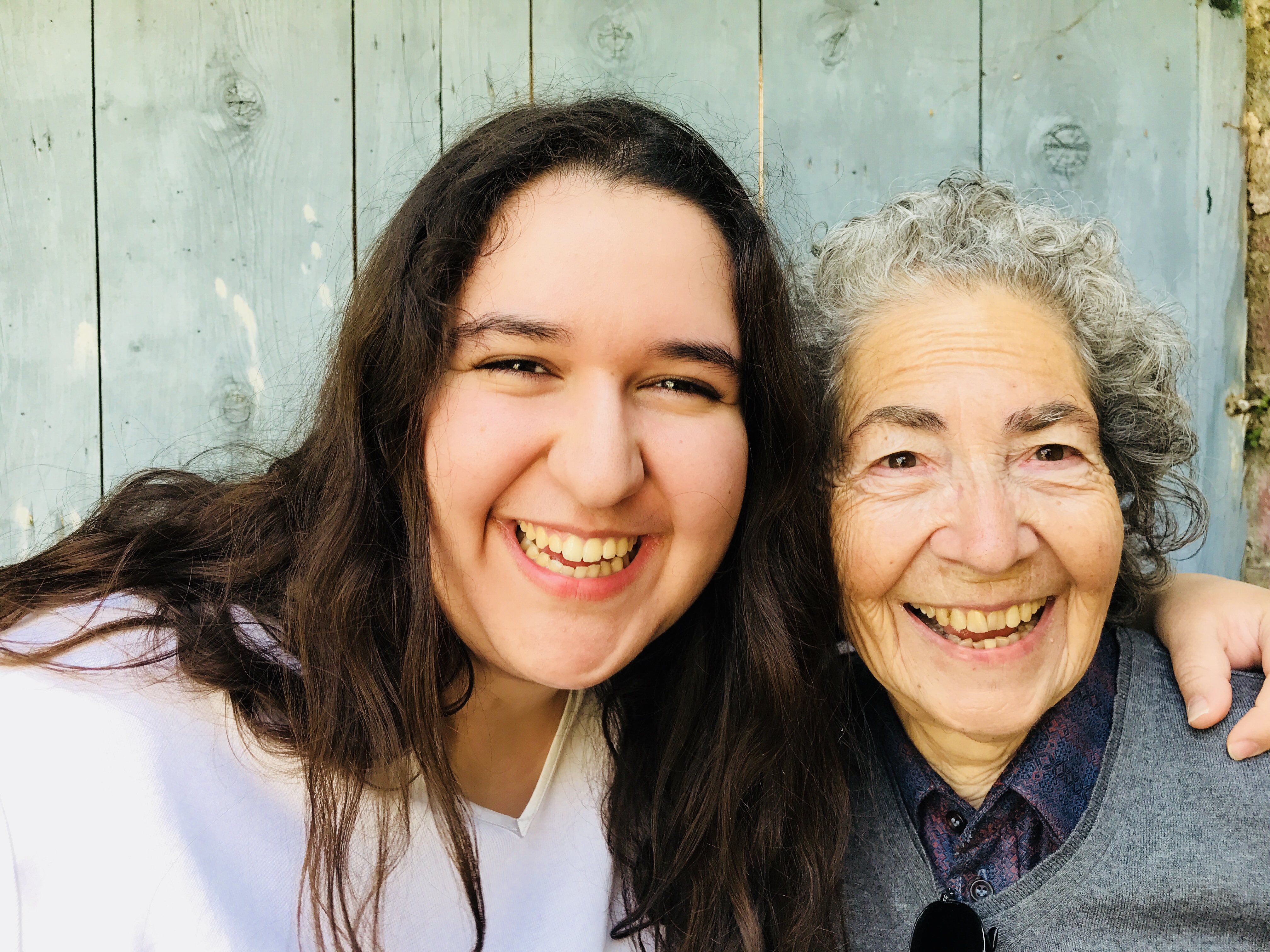
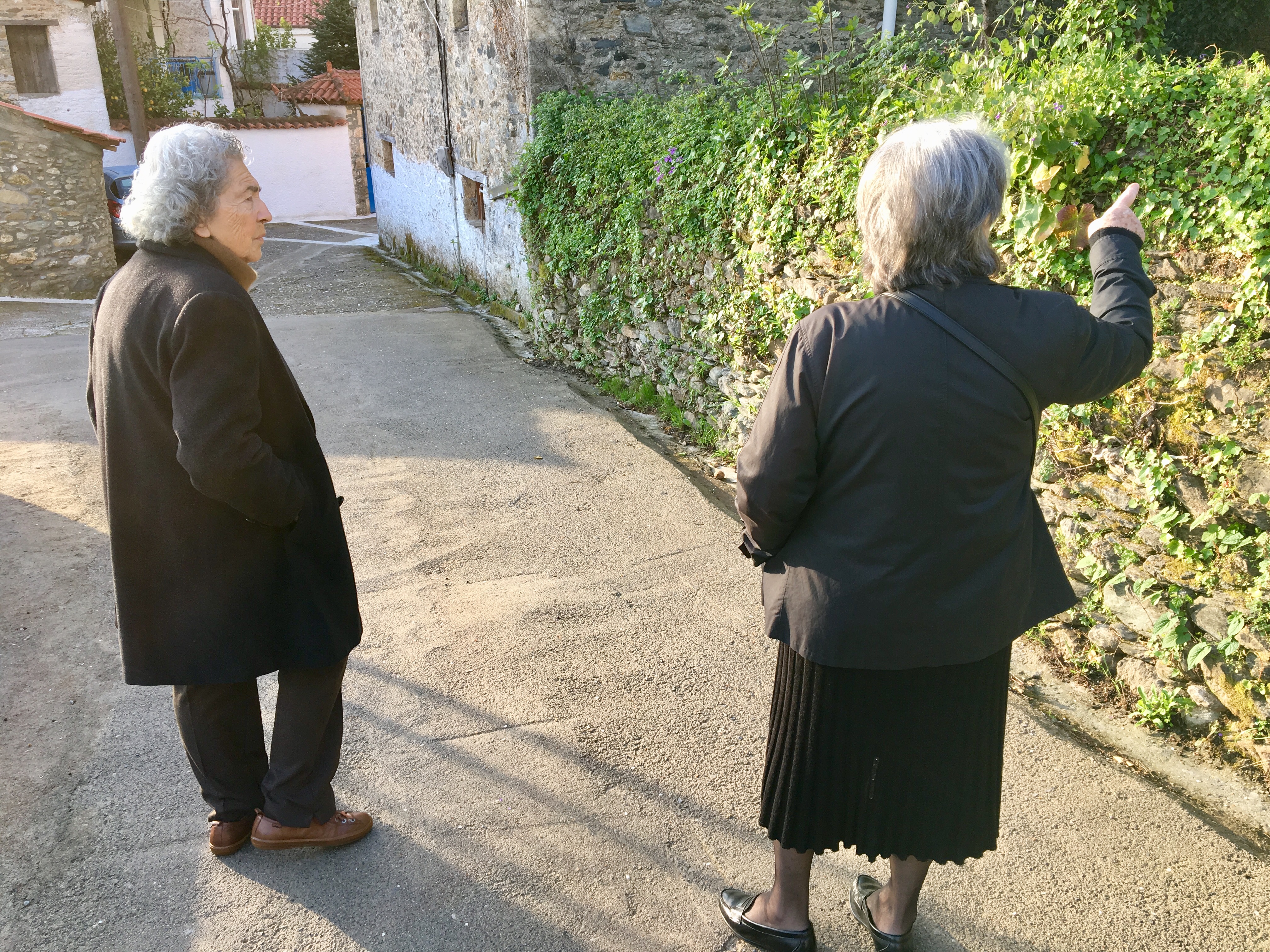
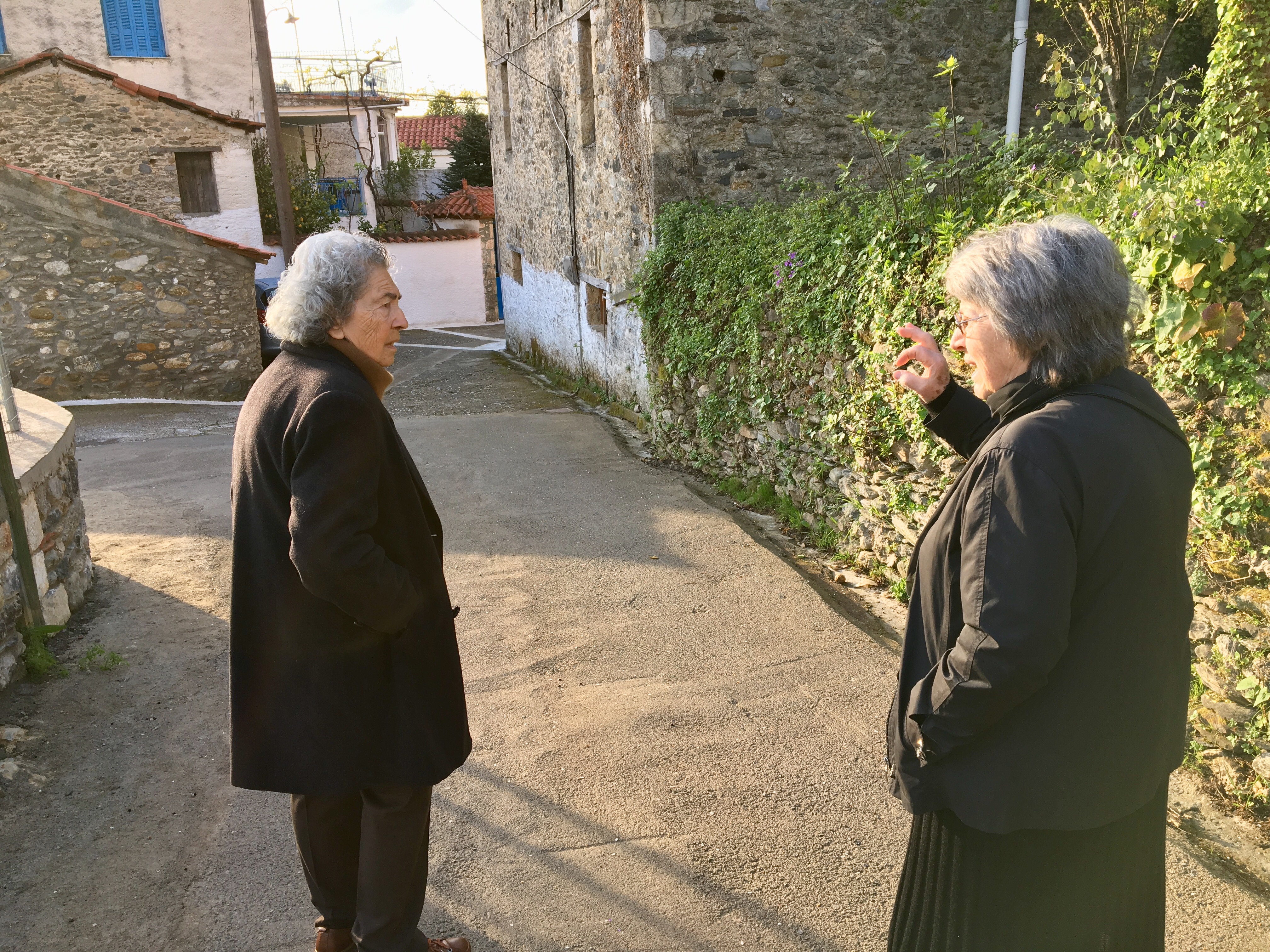
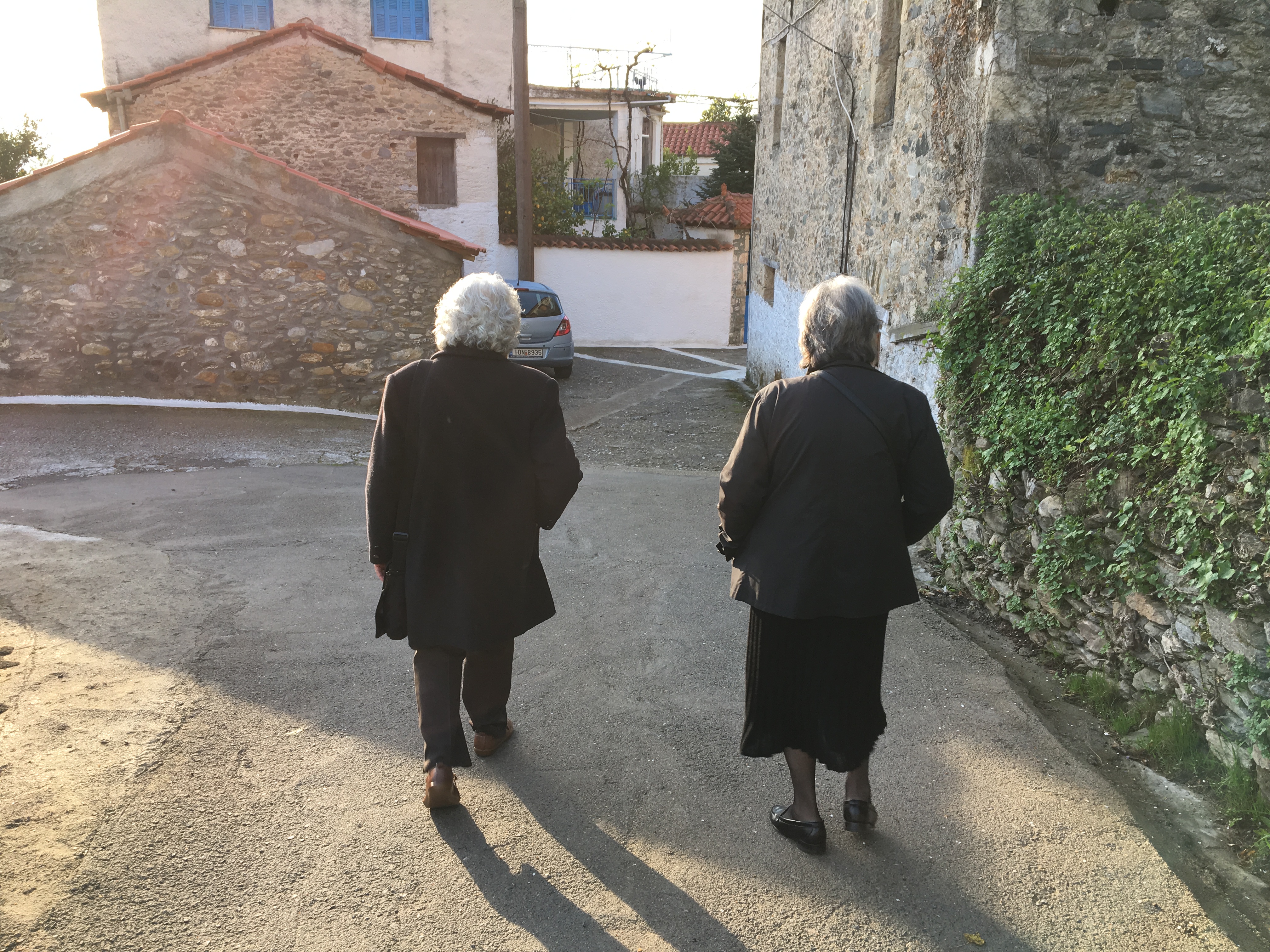
My grandmother (γιαγιά) and I write this blog-post together. It is her willingness to write with me that makes this both an exciting, and deeply meaningful entry for me. I usually try to abstain from using my blog as a diary, but this is different. We recorded parts of our visit at my other grandmother’s family home in the village of Καστόρι (Kastoreio) during Easter. I have asked my γιαγιά Sylvia to tell this story with me because she is one of the first narrators in my life. All throughout my childhood nights, I can follow her voice reciting my favourite bedtime tales which I made her repeat over and over again. There were so many stories that were so special told by her; a treat of childhood.
The more I grow up, I see her sink into herself. The older she gets the shorter, the frailer she becomes, the more she allows herself to be equal parts fearless and daring, fully sensitive and vulnerable; a better grandmother and storyteller.
Eating pizza in our Athens home after returning from our trip, I tell my grandma that the blog-post is almost ready for the internet. She replies with surprise: ‘What? The internet?’ It turns out that all this time that I had been telling her ‘we are writing something for the blog’, she was hearing for the ‘μπλόκ’ (block), which in Greek roughly translates into ‘notebook’. We laughed, and she agreed to have her writing posted online, even though it is, in her opinion, ‘terribly informal and descriptive’ and ‘meant for you to read!’ I hope you enjoy these moments of our Easter holidays- lost and found in intergenerational translation, caught between both our palms.
∗
Γιαγία
This year the plan was that the family would spend Easter at Kastoreio near Sparti with the rest: grandma, aunt, cousins. I would go a week earlier than all of them, and grandma Ermioni left before ten days to prepare the house, and to be there to greet us. But a tooth of mine ruined our schedule. The tooth hurt and had to be treated, my cheek was swollen. In this way, the days went by with pain and visits to the dentist.
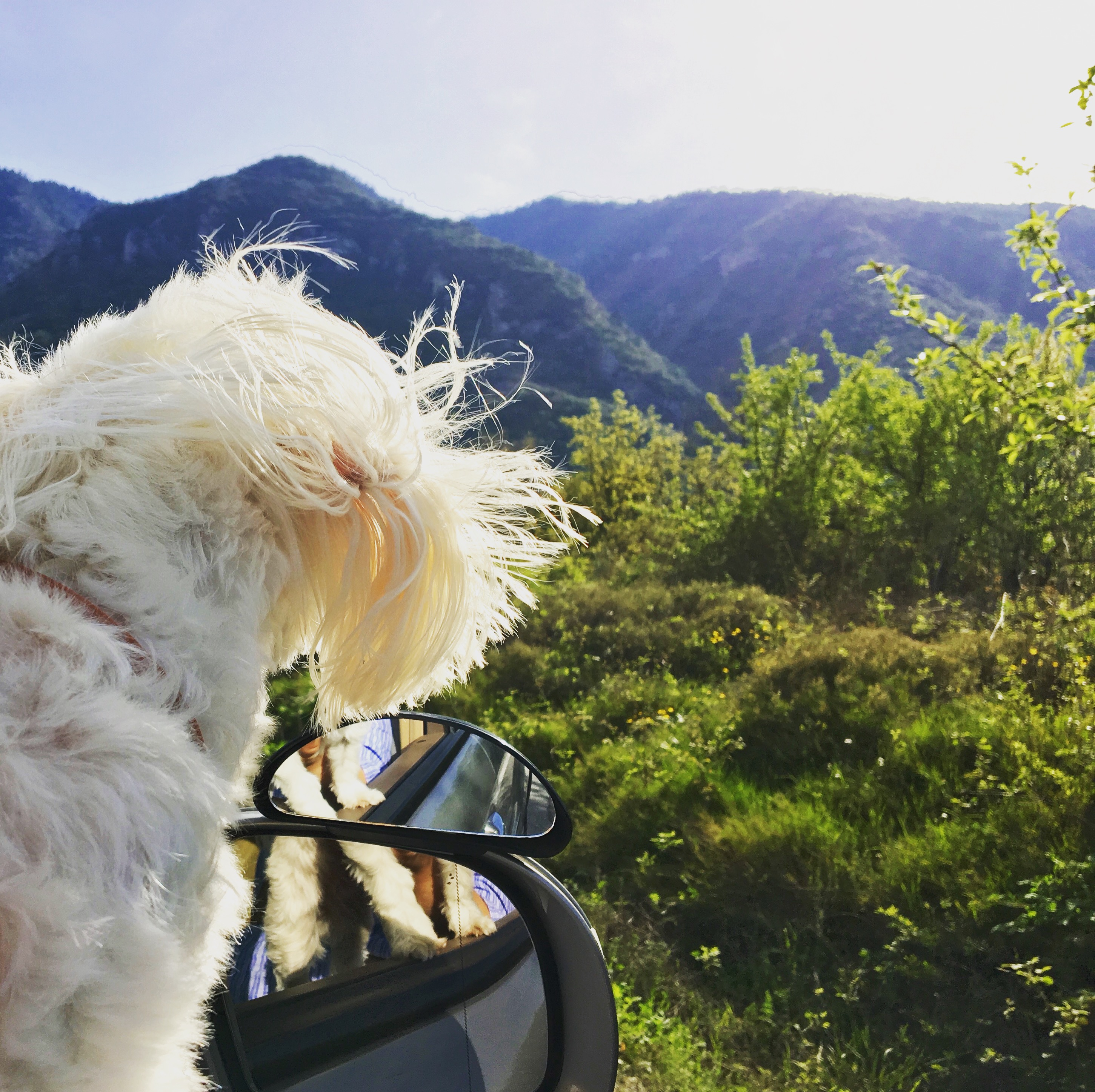
However, the problem was soon fixed and we prepared to leave. We left today, Μεγάλη Πέμπτη, at one in the afternoon. The weather was good and with the company of the children, the journey was pleasant. Even Alice (the dog) didn’t ruin the trip, because the poor thing was sleeping the whole way on my lap.
A little outside Τρίπολη (Tripoli), stopping at a café, we had coffee and a lovely one hour break. We continued in a good mood. A little outside Σπάρτη (Sparti), there was a road to the right and one that went straight on, unfortunately without a sign. George decided to turn right: it was a mistake!!! We missed the beautiful Olympia Odos, and there began the narrow, uphill, winding road!!! You see, we didn’t know that we had begun ascending Taygetus!!!
We were passing through little villages with their signs (for us unknown places), and hoping that the village in sight on a far-off mountaintop was Καστόρι (Kastoreio). At this little village called Λουγκανίκος (Louganikos), we asked an old man if he could give us some directions, and he told us that we should simply keep going straight onwards and that after passing the 1st and 2nd village, we would find Kastoreio; we went through 3-4 villages and kept going.
At the village Αγόριανη (Agoriani), hung up on the wall of its cemetery there was a sign advertising fresh pasta that was ‘locally crafted’. We laughed so much and joked a lot, and off we went to the next village: Γιοργίτσι (Giorgitsi), through which the road began descending. We had reached the top of Mount Taygetus. We were dizzy from all the turns in the road.
Thankfully, we began descending, but the road was winding and endless. We passed through Αλευρού (Alevrou)- another village- and kept going. Unfortunately, we could no longer spot Kastori in the distance. The road was winding and endless: would we ever reach our destination?? It was six in the evening when we saw the house (one of the last in the village), but for this reason, we saw it first up.
We arrived at the wrong end of the village! Thank god! Grandma Ermioni had fallen asleep in her chair waiting for us. Until she had treated us to some food, and we got to share our news, it was 7. The church bells rang, and she and I got ready for church. Tonight, we heard the gospel. During the 6th part, the priest came out holding Jesus on the cross. What a touching moment!!! We all bowed to him piously, and many brought flowers to his feet, and a wreath to his head.
We then heard the rest of the gospel about the sufferings of Christ and went home. We were really tired; we ate a little and had some tea. We all went to bed exhausted.
∗
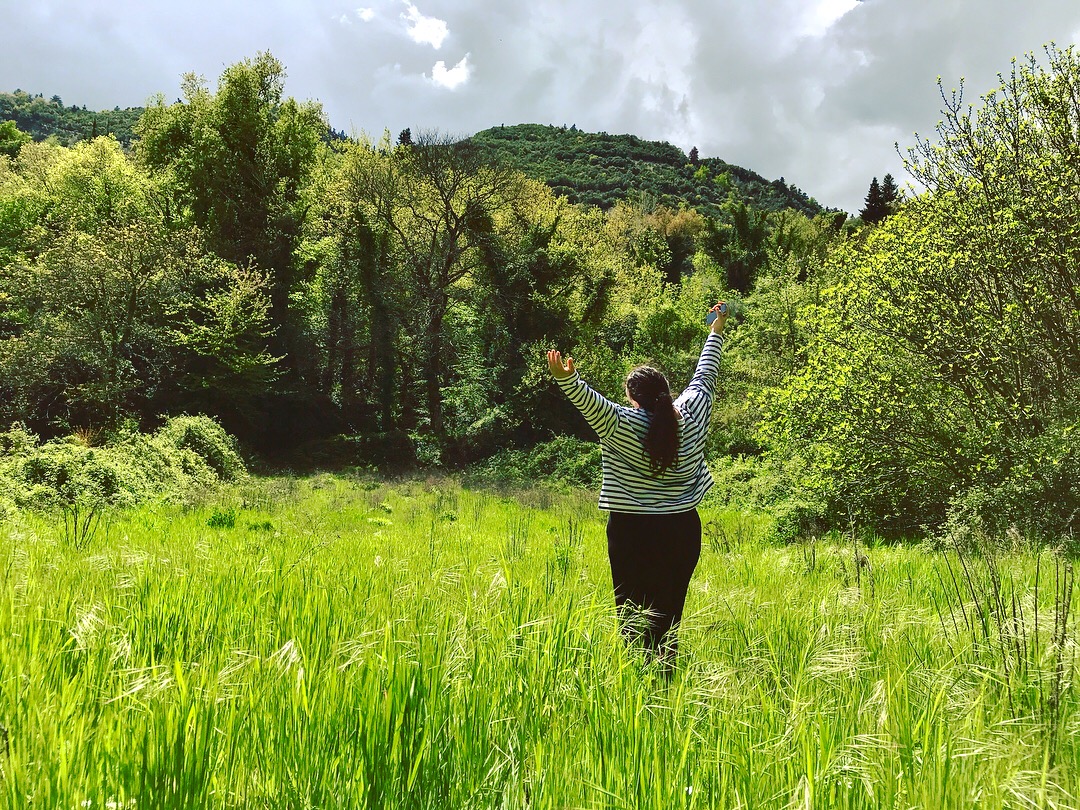
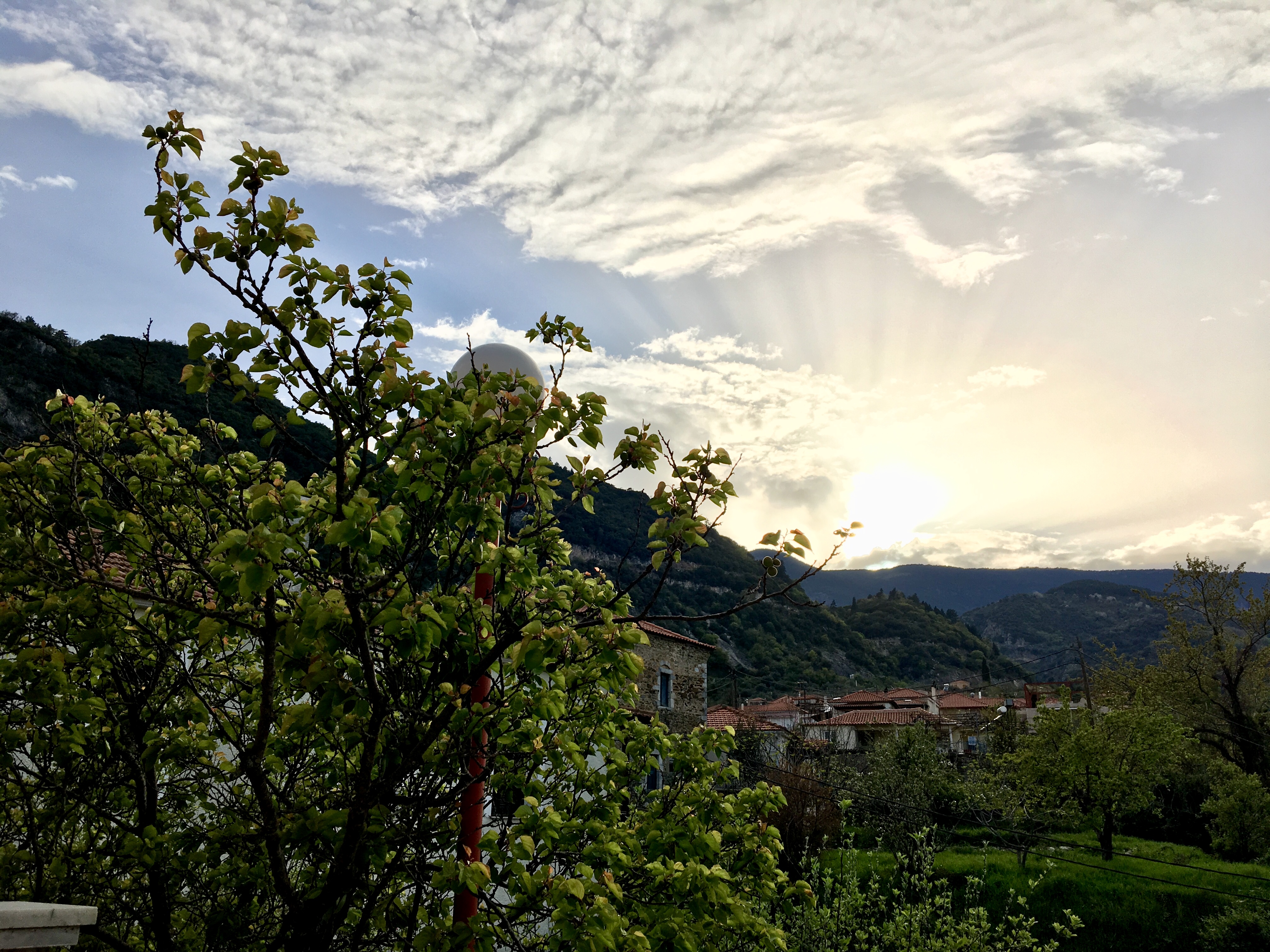
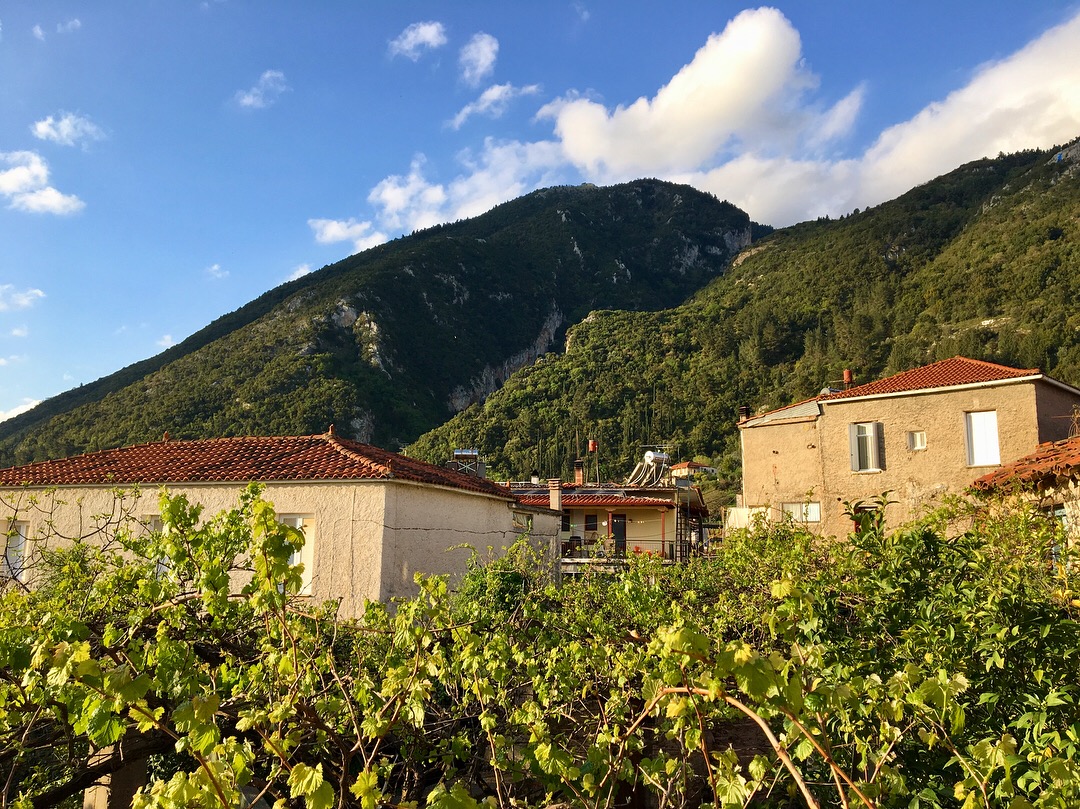
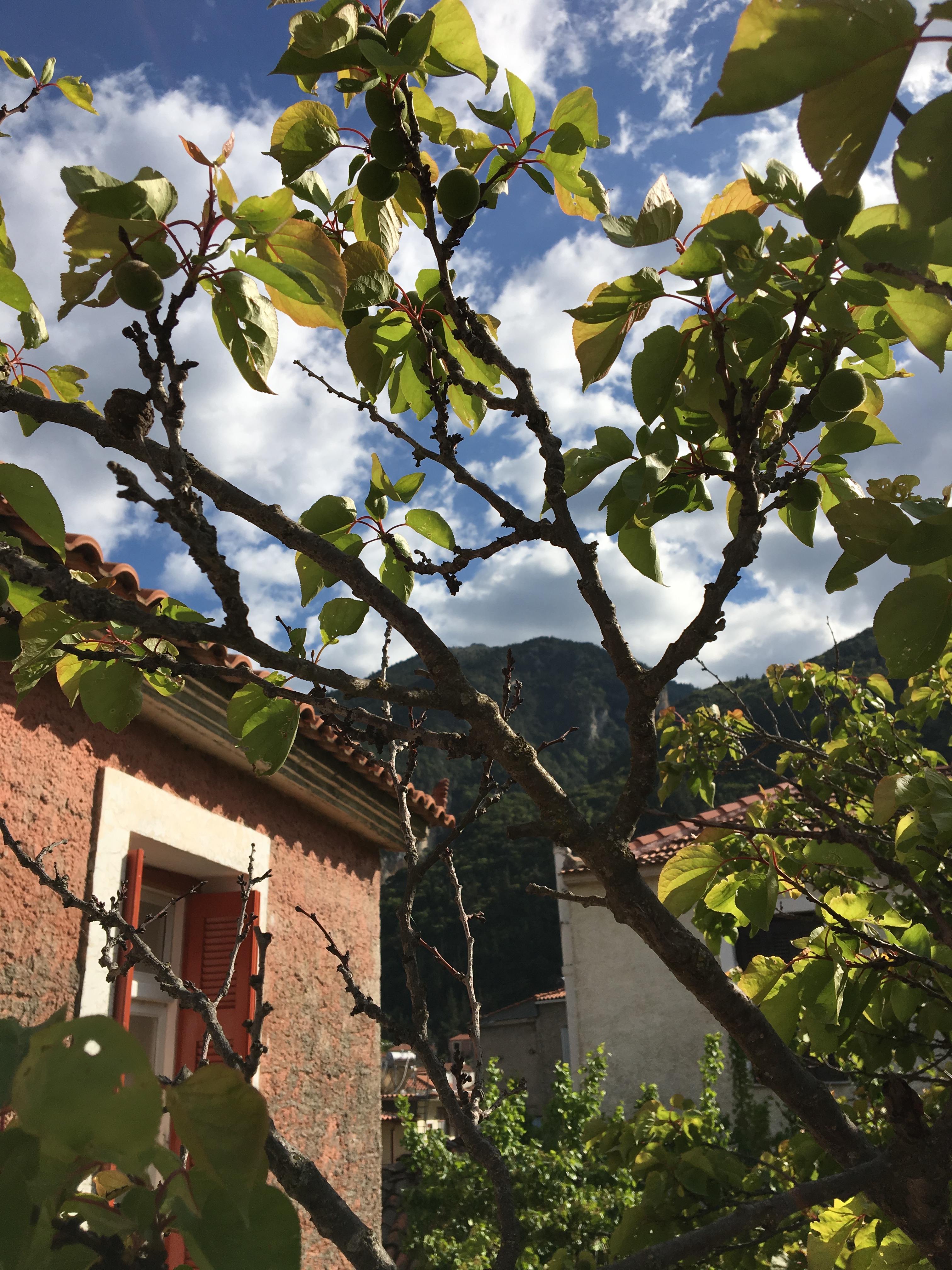
Rebecca Solnit makes the distinction between silence and quiet- the one is imposed on you, and the other you seek. After a long trip, I am finally breathing in the mountain air and updating my Instagram with pictures of green mountains bathed in sunlight. I have spent many Easters in this village as a child with my family: the house, γιαγιά Ermioni, and my memories are loud, and as I rest outside I feel the quiet; I feel quiet.
Sitting between cloudy blue mountains and the sun glazed green of the forest in the early hours, I am amongst my two grandmothers: the one gentle and sweet, and the other loving but loud, endlessly gesturing. Between cups of hot local mountain tea, I lapse into fruitless attempts to capture in writing or in a picture the essence of this place. As I’ve come here after five years, strange yet familiar to this place, I realize the impossibility of this. I tread the line between the identity of loss and newness, but this time I’m leaning more towards the latter, even in moments where I’m enveloped in my mother’s bulky jacket, sleeping on the bed we used to lie on together and read stories about Easter hens and golden eggs. Every family member has their own version of a story about this fluffy, brightly-coloured, patterned jumper, and when they ask me if I remember it being worn I say ‘Barely, but it’s very familiar and so warm.’
As my grandmother peels back the softened shell of boiled chestnuts, and I lie on the bed next to her and type notes on my phone, I’m very aware of the pain in my back that spreads to my legs- whatever pain was there is exacerbated by the extreme humidity of this place. I’m battling with the notion that being in physical pain impairs my ability to write, and not only in a physical sense. At times, there’s a certain feeling of fatigue that comes with being in physical pain, one that hides behind language adorned in a way that attempts to make processes bearable. This thought is uncomfortably reaffirmed as I’m trying to put down words stripped bare from personal meaning that hides behind phrases and metaphors. However, the very notion that physical pain in a sense impairs your creativity is categorically contradicted by my grandmother, who writes with honesty and ease; ‘to remember’, she says.
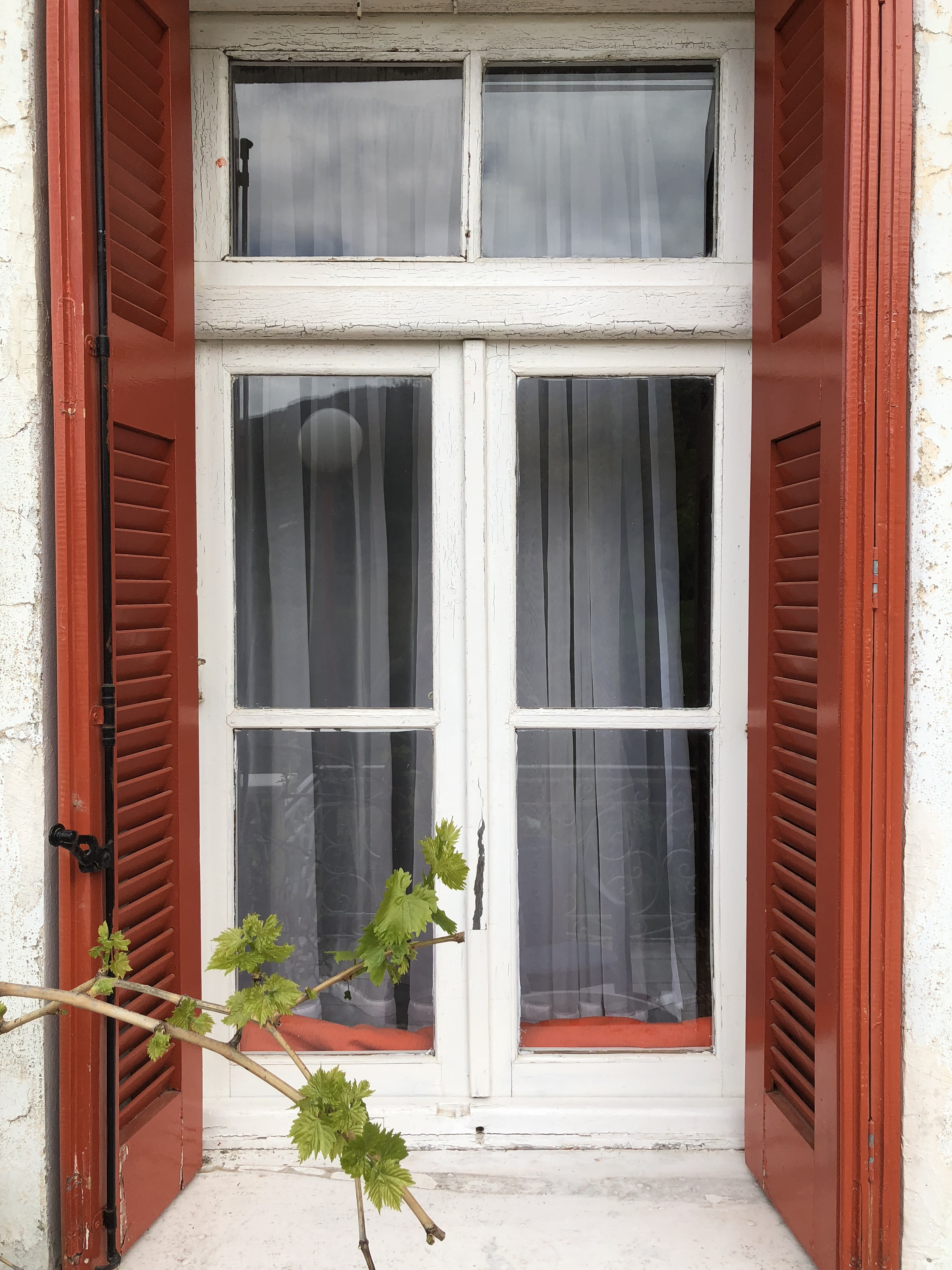
Honest writing: something that is so difficult when you’re constantly surrounded with people in a wooden house from 1860, that complains as you walk on its weak legs; you hold your breath between rare, uninterrupted thoughts. And yet, I am comforted by the fact that this place does not leave room for attractive words to complicate it: it renders them at once improbable and futile in the face of its cerulean mountains, and deep forests, jasmine and roses. It demands simplicity, giving it back in abundance.
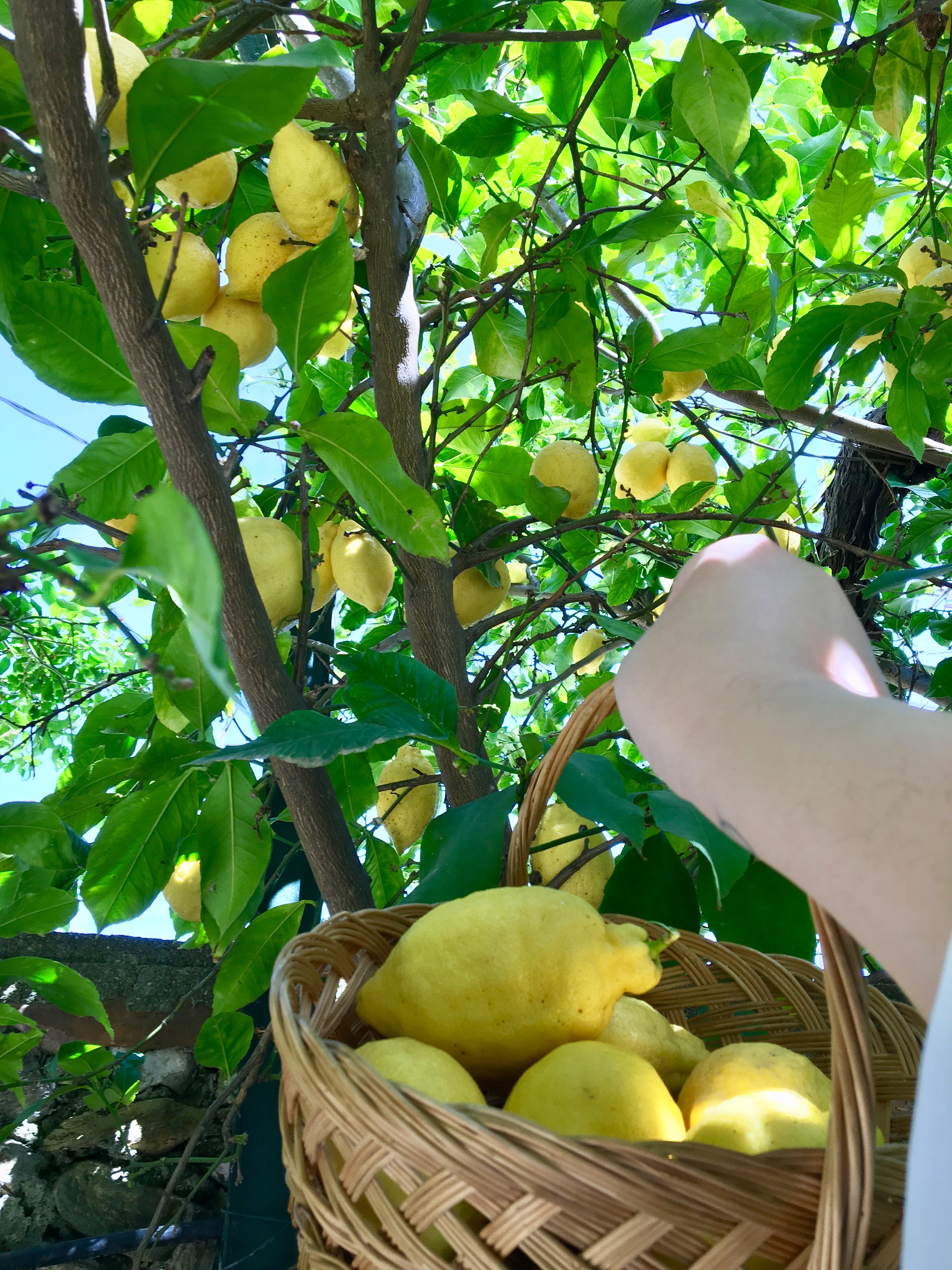
In noisy moments like this, my brother’s voice and my grandmother’s in an endless volume competition, I think that no one place can have a single face. Between the lemon trees and the creaking stairs, in the empty chicken coop that used have chickens and one rooster (only one), I see a place that turns its face away when I try to recognize it. To have ‘two faces’, in this sense, is not weighed-down with negative connotations. It is the shifting identities of people and houses, under different circumstances, that reveal the different aspects of their personality; people adapt, and places do, too. As my family has changed, my relationship with this house has too. With our many layers, we meet its own, and each one peels back the faces of the other. I realize that as we uncover our collected notions of a place and its significance, the faces that we knew it by converge, and we reach it with a new complexity that is more honest and familiar in its shifting identity.
I think of Maria Bello’s 2013 Modern Love column for the New York Times that she later turned into a book. It’s called ‘Coming Out as a Modern Family’. My cousin finds amusing how I write about experiences that were very ordinary in our shared childhood experience. I tell her how I see us as a modern family. I speak too fast. She smiles through the mirror. I guess the Greeklish explanations, the half-shaped ideas and foreign expressions are part of what I feel this creaking house to be: I have captured one of its essences.
∗
Γιαγιά- Μεγάλη Παρασκευή (Big Friday)
Melina said that she would write about today. I don’t want to take her turn- I’ll just say a few things about the sermon at church. There, in the morning during the sermon, the priest brought Jesus down from the cross, and wrapped him up in a double white sheet that was held up by four women, took the body of Christ on his shoulders, and placed him on the altar, where he will remain. All of this sermon is called “Pieta”. People were moved by it and many were crying- proof that they were really feeling it!!!
At night with another sermon, the priest moved the body of Christ on his shoulders and placed it in the epitaph which was adorned with flowers.
A choir of girls recited the eulogies and at eight, little girls holding baskets filled with flower petals decked the coffin. Later, there was no procession in the village because it was raining and the epitaph was only taken around the church, stopping at the entrance where people passed from under it in order to receive its blessing.
I was disappointed. And that because I wanted the whole procession to take place. I remember the narrow streets, winding like snakes, through which the epitaph would pass, all lit up with torches, looking beautiful from afar. I wanted to see this image again.
But it’s okay- maybe one day I’ll come back again…
∗
My grandma asks me to write about the Saturday of Greek Easter. ‘Put the moment down, you don’t know who will be here next year, or if we’ll have the same food on our table. It might not be poetic but it has value as a memory,’ she tells me. She’s right. How many moments are lost because we do not think they are ‘poetic’ enough to write about? And, at the end of the day, whatever you write is like a warm, well-made bed when it is down on paper. ‘To remember’, she says. I think about her words, and I write.
Saturday of Greek Easter at the village means that for the entire day, or at the very least, after communion in the morning, the house is flooded with smells of food: mainly, μαγειρίτσα (magiritsa), a thick soup of which I’ll spare the details out of consideration for the vegetarians amongst you. Goat with olive oil and fresh oregano leaves as well as lemon-roasted potatoes are also being prepared for Easter lunch on Sunday- a big deal, even in years when things are not going so well.
This year, I went to church with my two grandmothers, which made me the favourite grandchild. I did not peel potatoes when asked to, which made me drop on their list. Church bells echo through the village during the day, but especially after ten-thirty at night, interrupted by the sporadic popping and whistling of fireworks. Perhaps it is worth noting that as I’m writing this, my entire family is trying to figure out whether there is a marten moving in the attic- if that doesn’t capture the essence of this place, I don’t know what will.
At night we sit around the old buzzing TV, watching El Greco, and waiting to eat μαγειρίτσα. Half of us go to church at eleven thirty at night, and the other half (my dad and I), stay at home. We say ‘Χρηστός Ανέστη’, and respond with ‘Αληθώς’, and in the case of my dad ‘και του χρόνου!’ My cousin makes a comment the next day as she is applying her makeup in front of the wooden dressing table mirror with the candles and towering faux flowers. She says: ‘It was such a sweet moment, the way we were all sat around the old television, watching a movie and eating soup. When you think about it, the moment becomes something different, under a different light. But it was sweet.’ I think about my memories in the light of this place; the old cottage in the woods, hazelnut coffee, weeds and grass under our feet, red Easter eggs, and quick showers before the warm water runs out. The house rings with footsteps. It smells the same as before. I am grateful.
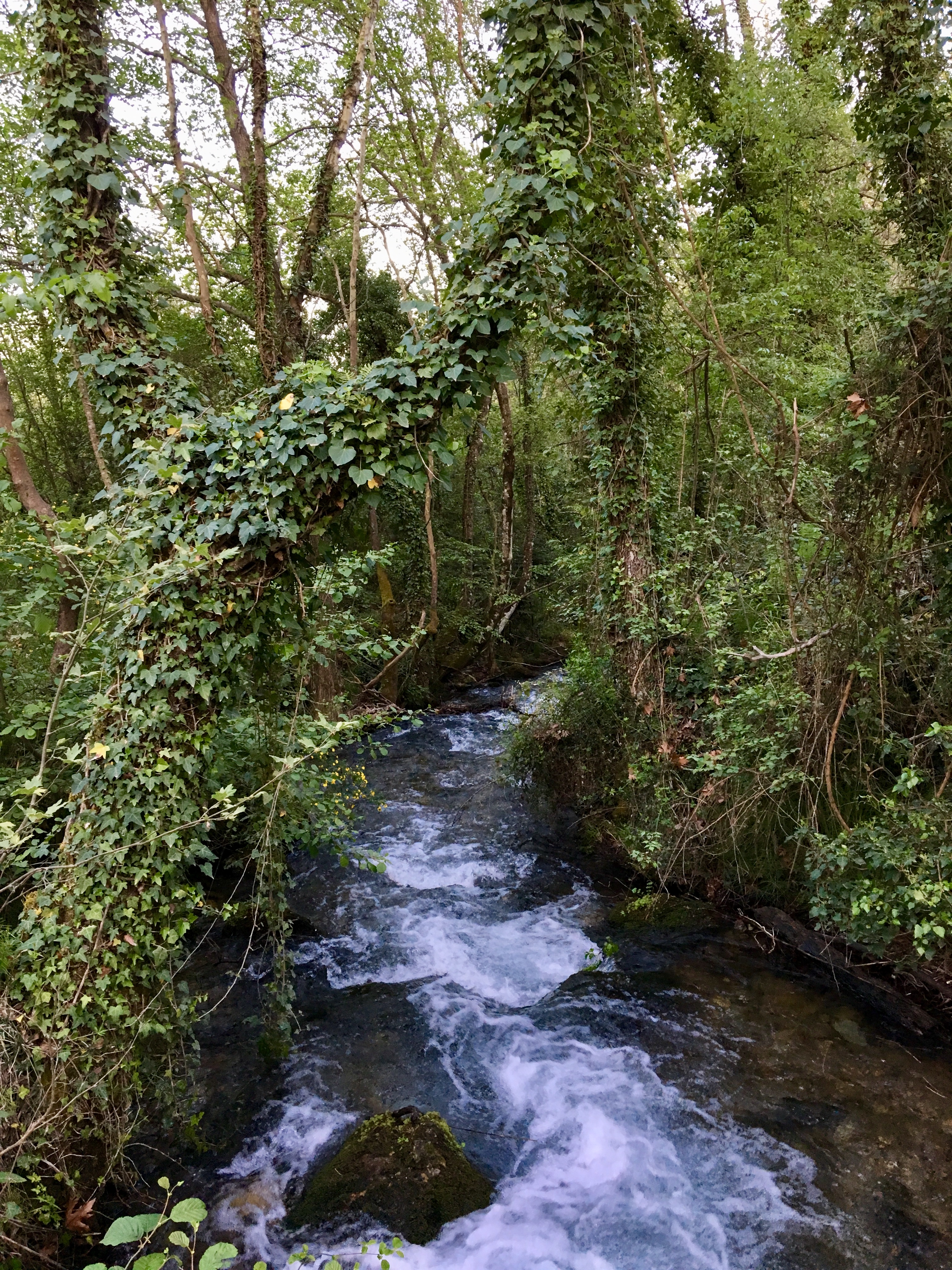
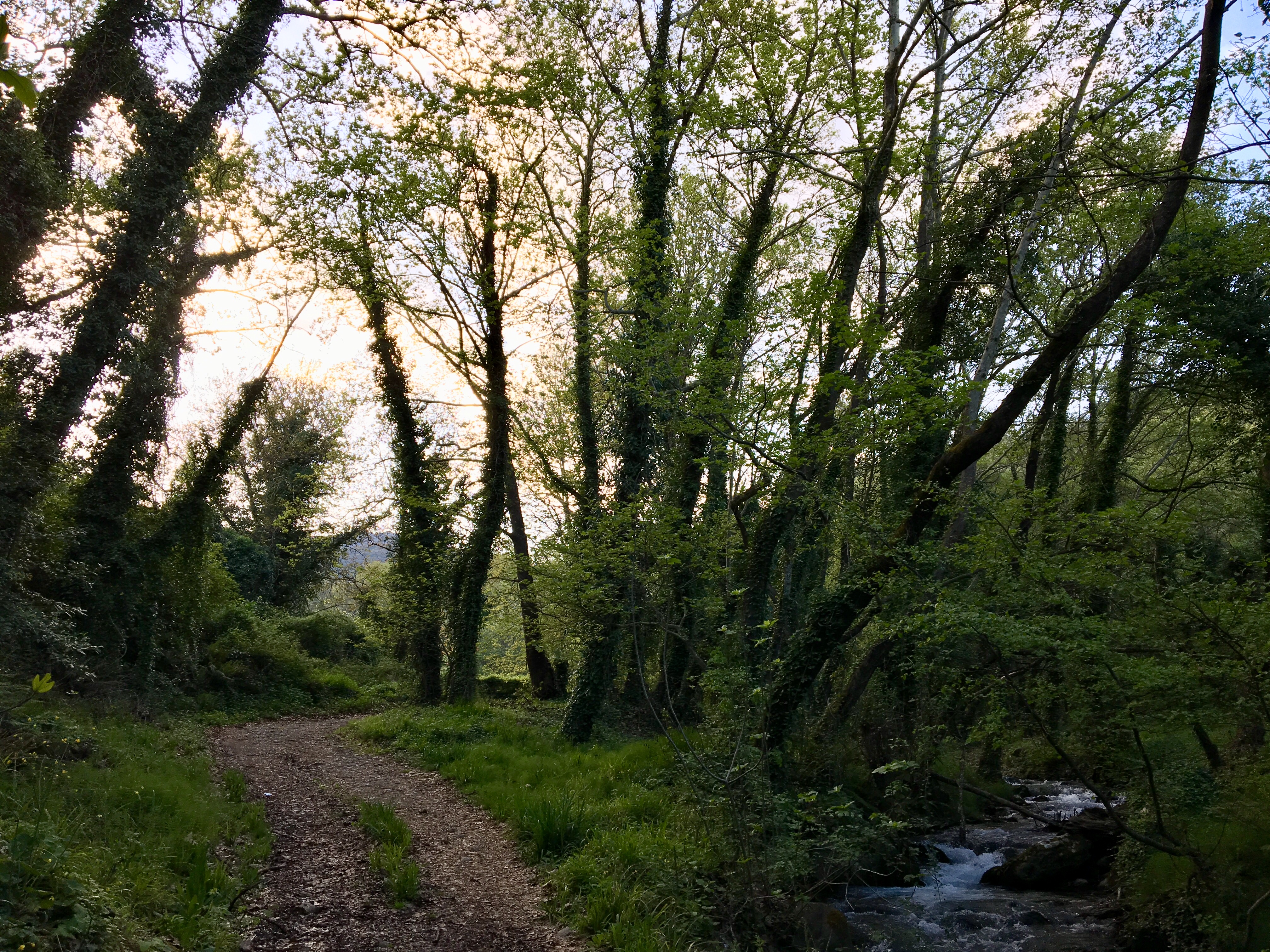
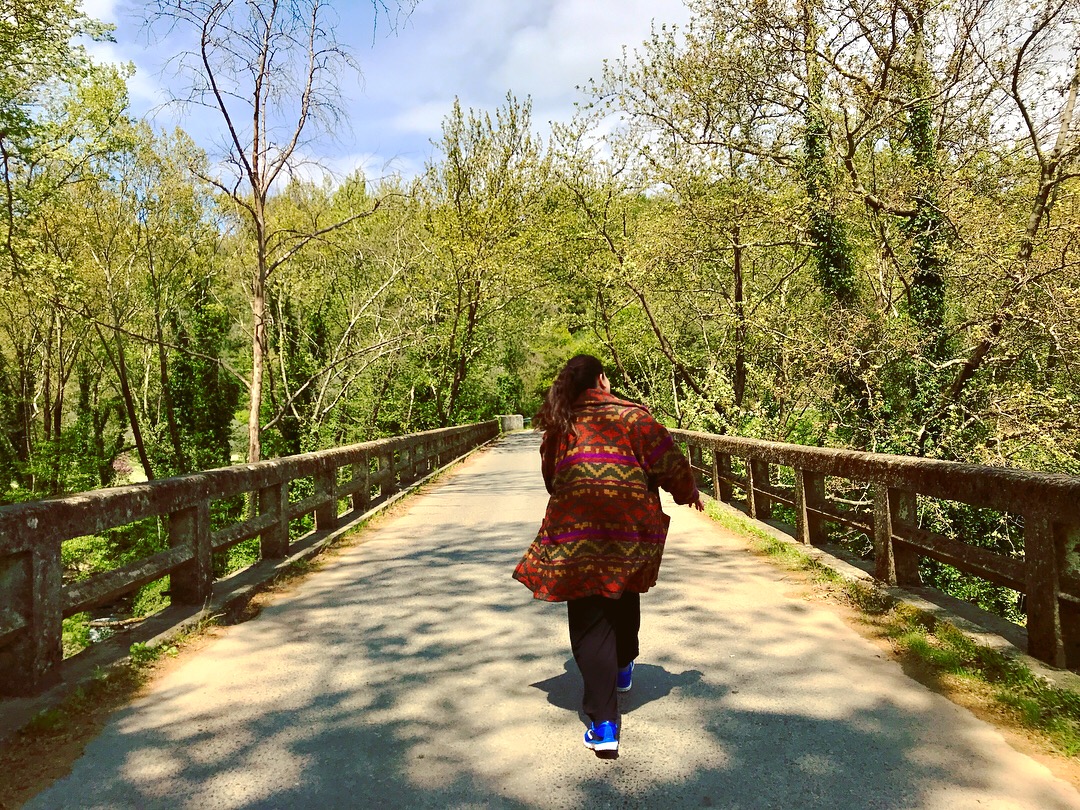
Easter Sunday, we eat goat in the warm breeze of the front porch. I keep the camera in its case and leave my phone to charge. We move to the backyard after desert, following the movement of the sunlight. Between clinking cutlery, laughter, patchy feminist conversations, and pauses to appreciate the view and the food, I am grounded by the smell of washed hair hugged by sunlight. I write from inside the house, anticipating a walk by the river. ‘Who wants coffee?’ comes from outside. Hearing their voices, I think of how strange and wonderful it is that people can come back to a place after being struck with grief, and rebuild bridges of celebration amongst one another. As I write this, I feel that my grandmother and I have captured the essence of this place in one warm, sunny, well-fed way. Καλό Πάσχα!
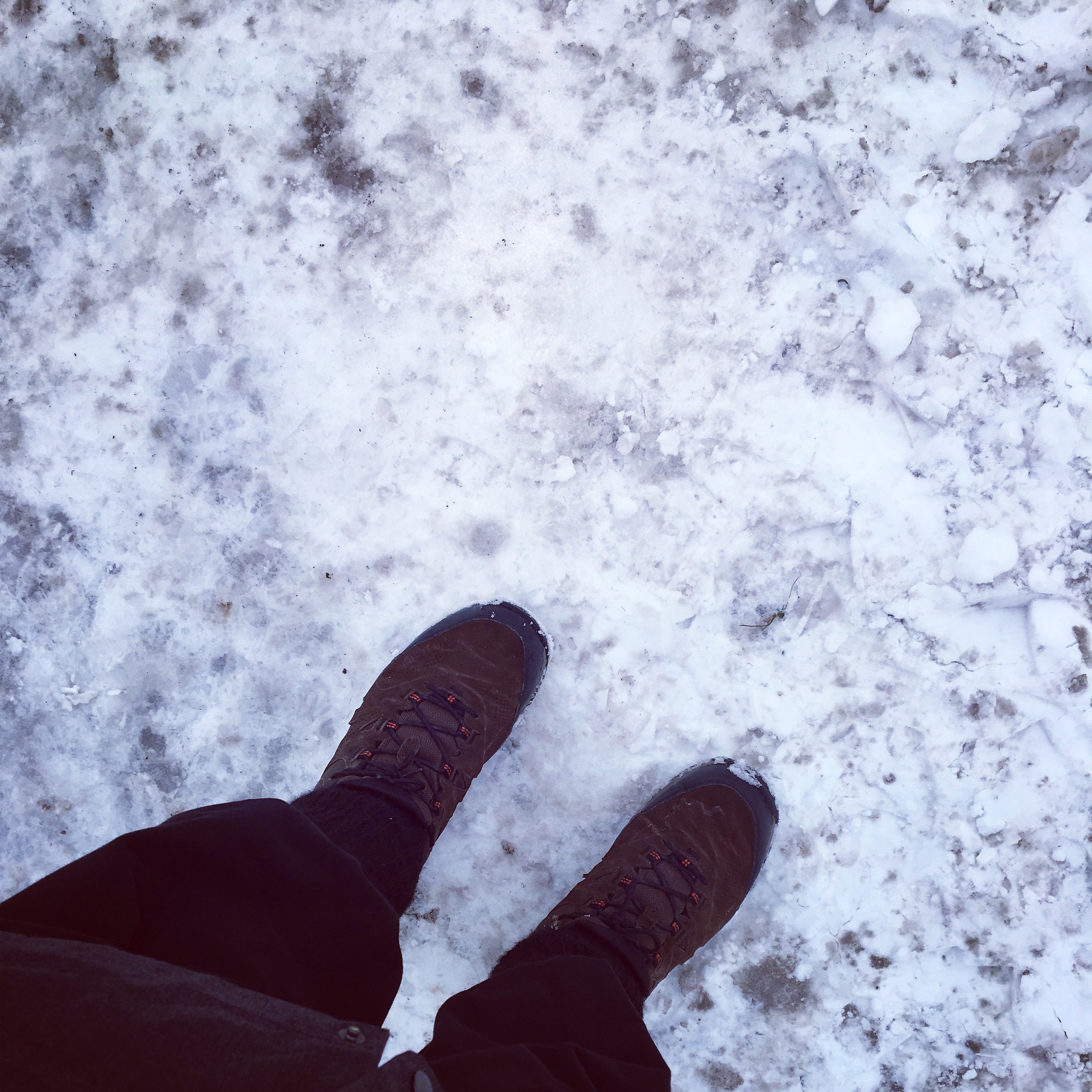
Easter holidays in Greece are the perfect time to write. Unlike the picture above, taken only about a month or so ago in icy Norwich, I can sit in our garden, and stare at an empty word document as long as time permits. My creative process if fuelled by Greek weather and Γεμιστά (Gemista), which, for those of you who don’t know, are stuffed tomatoes and bell peppers that truly make one believe that foodies have it better in life.
Seated in the garden, rested and ready to write, the page remains empty and I pack my laptop up, and head inside. I’ll write later- after a few days, a nap, a long walk in the centre of Athens, a few too many episodes of ‘Easy’ on Netflix, a myriad of internship applications (and a packet of Oreos), under the familiar artificial light that makes me wish I was a morning person. It’s comforting that my laptop is still running on U.K. time…
∗
I am always trying to wrap my head around what it means to have empathy. I have, on occasion, known empathy to be an awkward experience. As you grow into and out of your loss, times in need of empathy are filled with words that are too heavy in their own hollowness. It feels like trying to handle a stuffed animal that is too bulky, making it difficult to lift and carry around, much more to hand over to someone who needs to be comforted. Here you have these experiences that fill up the room, the whole house, and people cannot find a single thing to say that can help in cleaning up the mess. I’ve come to realise that we demand of people to be empathetic in a certain way that we deeply need. In my experience, the trouble is that often empathy is so much more about the empathizer than about the person on the receiving end. For this reason, as a person who has been (and hopes to always be) in both positions, it is so difficult to navigate the topic of empathy without being critical of myself and of others- which is, paradoxically, the very thing that must be done.
∗
As a person grieving, I have felt the many textures that are traced through the experience of needing to feel empathy. I have felt that grieving is not a flexible process. I have felt like certain words needed to be stitched through a very specific part of the tear, weaved in with waves of a particular person’s voice. I have felt what it means to expect this precise version of empathy and not receive it. Often, the voice that came was not the right one, the attempt fruitless, at the wrong time, not in the shape that fitted my size of grief. The realization that people do not always carry your shape of empathy is unsettling; to discover that you too are prone to leaving others barefoot in the face of their pain is even more confusing. Grief is unstable as it is destabilising- an evolving experience in which growth and immobility are concurrent processes. In the face of empathy, we are all children outgrowing their old shoes faster than our parents can afford.
I tell my friend that I think of my experience as one that is split down in the middle, at a strange angle. Ironically, my words come out as if I can see a clear before and after. ‘What do you define as post-grief times, then?’, she asks as we are perched up on my couch. I smile because that is a very perceptive question, perhaps unintentionally intimate. It’s one of those questions that catches you in a personal moment where you are carefully balancing your reality between distinctions- then and now, ‘pre and post grief times’. This imagined reality is miles away from the one I have felt. It is my experience that loss lies one moment in feeling your grandmother’s soft hands, and the other in walking past the launderette where someone is washing their clothes with the detergent your mother used at home when you were a child. One day your life is dominated by these moments, and the other, still learning how to move again, ready or not, you must run over to someone who needs you more than you need yourself. The distinction is blurred. Empathy becomes a rope of which you can see both ends, and both are tugged at to stabilise both yourself and the person on the opposite end.
∗
This past year has seen people I love in loss. Barefoot, I am trying to navigate the game of empathy, and I am full of blisters. I say the wrong things, feel myself questioning when it is right to break the silence, send a message, call, knock on the door. I am an unexpected visitor in someone else’s sadness, and it can be so uncomfortable. What are the right questions? Wasn’t I supposed to know some of this from my extensive experience in the field of grief? And, at the same time, I ask: am I not the person who stresses the individuality of each experience?
In realising the fragility of these situations, I am choosing to ask questions without treading over them with my own assumed knowledge. I promise that I will always take my shoes off in your house if you will let me in.
Sitting with my friend across our scratched kitchen table in our Norwich home, we talk about crying when we are alone, for our past and present selves that have been hurt- are hurting. In what seems to me a deeply honest set of joyful tears and painful laughter, the sorrow coated, strange-looking words are dropped on the table: ‘We are healing, Melina!’
Months later I am listening to my favourite podcast, Dear Sugars, and Cheryl Strayed discusses how recovering from the darkest period of her life, she nurtured herself back to health, did not let herself be swallowed by the severe presence of grief. I quite literally stop in my footsteps as I hear the phrase: ‘I have been loved too well’.
She explains that the reason she chose the path that, to her, represented healing, was because she had been loved too well to let herself go. Her mother taught her how to love herself well. I have one of those moments where everything overwhelms everything that sits comfortably posed around it. In one warm Athens evening that welcomes mosquitoes, I am so demandingly reminded of all the times I have cried for myself or thought of myself when I have needed to cry.
∗
I cry with simple, soft things. I cried as my therapist told me I needed to treat myself kindly. I cried when I thought of how my mother put me to bed with stories. I cried when I heard on YouTube the story she would play on the CD player that was placed on my bedside bookcase in Istanbul. I cry as I construct the personal metaphor of myself being nurtured back to health. I cry as I realise I might be missing something that I will never be able to have- I cry as this realisation hardens into a truth. I cry at the thought that I had to grow up abruptly, at a capricious command. I cry at the thought that I didn’t; that I was taken care of so well in pre and post grief times. I cry so often speaking to my father about building things- over, again. I cry on the bed, and I really wish I could cry in the shower, but I cry. And when I’m done crying, it clicks: I too, was loved so amazingly well; I too, was taught how to sprout back.
∗
And yet, ‘too well’, taken completely out of context, is weighed with some other meanings. Family members, as it goes, commented on the way my parents raised me. Strangely, they commented that I was given too much love- as if love is stored in mason jars- tightly sealed with a ‘use by’ date on the lid, and nutrient information on the back. What a strange idea- that a child can be loved too much, cared for too well. They told my mother to read me fewer stories at night. They told her that I would grow up to be spoiled.
My mother’s response was to read novels to me. My mother’s response was to walk in the snow to take me to ballet and swimming class- she was on the brink of bursting, her belly swollen with my brother. Her response was to send me books about how babies are made, and a massive, soft teddy bear that I later developed an allergy to, from the hospital ward- she was sick with pneumonia and about to give birth. My mother’s response was to have close relationships with all my teachers- she wanted so much to tap into my thirteen-year-old attitude that spoke so much and revealed so little. My mother’s response was to do all this but also warn me that I must never judge anyone because we are one inch away from becoming the other.
And I was so content, and sometimes so desolate; I felt it all so acutely. I knew that her response was to grieve for me more than I was grieving for her.
My father’s response was to hold our fifteen and nine-year-old hands that in a day were covered with wrinkles of a special kind. My father’s response was to give us significant promises for a future that we thought to have seen buried with our own four eyes. My father’s response was to listen to me endlessly as I sat on the edge of his bed and felt so much, all at once. My father’s response was to take me to all the doctors you can think of; any professional that could help- it was so difficult to help, even harder to be professional. My father’s response was to say all the words that were needed, to give all the hugs that, if missed, would have left the gaping, grieving wound developmentally exposed and emotionally infected. My father’s response was to fly to Thessaloniki during a competition. My father’s response was to give every last second of the short hour to patching me back into a functioning quilt. And, now, I still feel it all so deeply; and when I don’t, I know what it means to be able to.
And what were they responding to, my parents? At its core, to the way I needed to be loved; softly, like a patchwork quilt, like ballet lessons in the winter or giant, dust collecting teddy-bears, and novels read out-loud.
∗
A lot of my writing reads like a tribute to my parents. This entire post feels like I am trying to fit the history of my person in a sentence- a ridiculously absurd, non-existent- possibility? I feel the closest to that that I have ever been tonight. I feel that the closest I will ever get to that one sentence is to say, ‘I have been loved too well.’ That is, so well. I have been loved so magnificently, so I allow myself to be all at once the person who acknowledges the double reality of what it means to cry for themselves.
It is not self-pity; it is self-love to be, quite frankly, painfully honest with yourself. And, in this way, I am rather suddenly reminded of the humanity I am learning by loving myself to health.
A small tribute to mental health day. I think it is important that we honor in our writing not only the composed, thorough thoughts but also the moments of disorientation and confusion.
I have felt it-
The chest sitting ear splitting-
Have you felt pressure that says
You need to have an important
Conversation?
It asks you to sit on your bed
Have you emptied it yet
Only a moment ago
To sleep on.
You
Are not sleeping.
Going to university is defined by possibility. We leap from the extraordinary angst of teenage years into the anxiety of realizing potentials. We are surrounded with an exhilarating energy of learning and innovation.
It tells
You that you
Need to
Work it out
Because you have not
Finished your reading again.
I have scheduled
Even my meals
In my head
Even my
Sleep
I do
Not sleep much
At times, even possibility can be cripplingly exciting. Suddenly, there is endless room to discover. Occasionally, it feels as if there is too much room. We are not used to keeping ourselves upright in such a large space of opportunity that does not come with step by step instructions.
Anymore.
It taps its branches
On your knee
They tap like frantic laughter
They cook your scheduled meals
They have turned your pages
Haven’t they
They have pierced your time
And laughed
You laughed
At the papers on your desk.
We lapse into comparison. Small anxieties feed on our self-assessment and they mature into feelings of inadequacy. It is not necessarily a crippling sensation. To be in a constant race with everything is part of the process, and you deserve slightly off-budget raspberry tea if you make it through the week without crying.
It asks the questions
Why do you so need to create?
And be rewarded
Am I not enough
Have I not pushed you am I a failure?
You have
But I need my own pressures too
You understand
Don’t you?
If we did not keep ourselves awake at night pushing for a few hours of extra reading or researching graduate degrees we would not be initiated properly into the adult world which we have only experienced through washing our clothes and buying fresh bread.
Don’t I
You ask
Of course
I do I just want you to wake up
Cradling me like your very own
Like you do.
Sometimes, it is so difficult to slow down; other times, everything feels like it is thick and slow. A lot of the time, we regret not having finished the reading which was impossible to finish because 48 hours of studying in an afternoon did not work out for once. It is important to reflect on our privilege and to be composed. But, part of being a student is starting your sentences with ‘but’ and forgetting to use commas. And that’s okay. Buy some raspberry tea.
My experience with honest writing is rather commonplace. I will often (but, not always) write the most honest words when I am on a train or a plane. I will get the idea in the shower or when I am doing my dishes. Movement and transitory moments are loud and crowded and sometimes the most solitary and creative. Transportation, in this sense, can be a magnificent reflection on privilege; a place where movement is not a loss.
Honest writing happens during showering. Warm water evaporates and returns replenished: an image of its own possibility. When I write most honestly, my eyelids feel dry and heavy, and my typing rings with a mechanic quality. I am not sipping on tea or gazing out of my window. Maybe someone else is. But I am arm deep in dishwashing bubbles and scrubbing a pan when I think of that which could be written.
Honesty and grief are two topics that are very close friends and spend most of their time together. They are the ones drinking the tea instead of me.
Grief is often a situational experience for me. I always wish for grief to be honest; to explain itself. In turn, I try to demonstrate the ways in which our relationship is like that between me and honest writing. I accept the effort that needs to be put in on my behalf. In return, I ask for the opportunity to do so.
Honest grief lives in the realisation of the things I see myself as incapable to do. Or, rather, it is caught between the moments in which I begin to believe that the object of my grief could have shown me how to do things better. That which I have lost would have dealt with the situation better than myself. In these moments, I get a glimpse of an object which is steeped in the grief itself. A thing of warmth, like laughter, and I am set in a process of searching through disorderly moments of the past for a more tangible experience to bring me closer to the new feeling.
This grief, although lacking in a clear definition, is honest. It speaks in the language of needing to cope, and not in terms of detachment. I think of the person’s favourite books; perhaps, I can read something that revised their understanding of the everyday. If this does not work, I could emulate their handwriting style so that my words, even in appearance, can form an attempt to resemble their own.
The grief of these needs seeps into me involuntarily because of their honesty. They have not yet seen themselves dressed in retrospective tulle and silk. I have not met them in official attire. Our encounter has been utterly informal; they have seen me do the dishes.
∗
I have been writing a piece on my grandmother. It is taking time. And I thought I would not post anything for a while because it didn’t feel like the right time to do so. I do not think that it is necessarily a good thing to wait for the perfect moment to write. As most people know, these instances are deliciously rare, and you will not get your degree if you wait for them. What I’m getting at is this: although I did not want to write anything before I finish the piece I am currently working on, I would like to celebrate and applaud my own moments of writing spontaneity.
Sometimes, in order to write, I need to take a lot of time. In these moments, I sit on my chair and feel the texture of the thoughts once they have settled. Only when I have done this can I expect the words to cooperate. Even then, they often form sentences in fragments, to be constructed and deconstructed in the process of editing.
Most of the time, these will, in fact, be the best pieces I write- I know this. Pieces well researched, well thought out, with both time and planning invested in them; the obscuring clutter around them is tidied up and put away. Yet, there are other times when writing can feel incredibly honest to me when it begins on the train, or next to the kitchen sink. I will clean it up in the end as I would the others, but it will be stained with soap marks that do not go away.
These are fleeting moments which move me in writing and in grief. They consist of the matter which gives writing a human voice. Together, grief and honesty web an authentic mess that spreads and links the iPhone keyboard with overwhelmingly personal feelings. Like this, I see the words hold hands with grief.
∗
I am on the train, and, in all honesty, my eyelids are too heavy to keep open any longer.
When I was around ten years old, we went on a school trip that is significant for me to this day. As part of an assignment, our teacher took our class- the prestigious Year six, oldest of the youngest- to an elderly home. This prospect was exhilarating. It meant I could attach the stories of entire life times to people who had the capacity of having lived them. Even the idea of this roused in me the deepest sense of excitement. It seems comical to describe my ten-year-old anticipation in this way; retrospect coats colourful childhood memories with its elaborate new descriptions.
We took the bus there. The details packed around this quiver and ring present to this day. When we arrived, we were assigned a small group of three or four, and accompanied by a resident who would show us around their rooms. My group followed a man who was as eager as me to be listened to; I felt attached to him. He told me some details about his heritage. Regardless of what he had chosen to talk about, I felt a great sense of comradeship with this person who was willing to share his story with me.
We sang with the residents, or performed for them; this memory has been worn out. The trip left a lasting impression on me. This was all part of a class exercise: we would write about our experience. I felt so proud to be at home when it came to writing. I was not ashamed or reserved for my writing or of the pride that accompanied it. It did not occur to me that my words might be the ones used by my classmates who wrote about similar experiences. If someone had told me that the boy next to me was describing the same man using similar words and expressions in his work, it would have meant nothing to me. My writing was mine, untainted by questions of storytelling and ownership.
Sometime in the same year, we went on a holiday visiting parts of Spain, France, and Italy with my parents. My teacher had asked me to keep a diary. Most evenings I tucked my chair close to the desk in our room and wrote in the little black book with the strap. I’ve read it since and it strikes me that I did not fear detail or repetition. This small, private freedom indulged me in small pockets of creativity.
∗
Studying at university has made me hyper-aware of the similarities between my writing and that of others. It is a routine to find myself tracing the influence of other people’s writing in my own thoughts; before I write them down they are censored. Don’t get me wrong, I think that being aware of the influences behind different aspects of your writing is a crucial aspect of originality. And, of course, I am not encouraging copying, nor do I believe it is an honourable practice; crediting those whose ideas you are using in academic writing is a core and extremely valuable practice. I am speaking, rather, of the censorship that seeps into the flow of creativity when I become vigilant of those who motivate my own creative pieces. It seems self-evident that influence occurs. Especially as a Literature student, it is more than often that I will find myself echoing the tone of the author(s) whose work I am analysing in my own essay. I am aware that what I am describing is not considered copying. That is how it goes. You read someone great and then you mirror them and that is fine.
Logically, it makes all the sense in the world. Nevertheless, awareness of influence translates into censorship when it seeps into my creative writing. In that realm, it feels different to see the voice of another in your own. When it is a personal piece in which you hear the last book you read colour your tone, it feels unoriginal. You feel like a cheat. I will not try to analyse where this stems from. I have no idea. What I do know, is that I have observed in creative writing as much as in literary criticism that young writers like myself are afraid of starting from the start; of being beginners. This process implies that your voice will carry strong aspects of those that you enjoyed reading or others that have influenced the way you think. In learning to write, we will have to learn to be okay with this; to value it, even. Someone has said that we are afraid of being beginners, I know. Someone must. What was their name again? Influence is infectious.
Then, so much is thrown into the gutter of ‘I have worn this out’. There is a certain fatigue that follows the aforementioned process. Thinking this way about writing, tracing obsessively the influence of other’s work in your own, defeats your will to write and be expressive. It does it to me. I do not want to write about singing with the residents, the story exchanged with the man, or the process of retelling the events. Someone must have done it already. I have thought about it for too long. Following this dizzying train of thought makes you hide in your room with a piercing headache, while your friends sit outside and discuss their pieces, giddy with the scent of someone’s influence running through their own. Maybe, it is worth unpacking why you feel that you will enjoy your piece more when it is finished and you can look at it as the final product.
This particular piece does not end with a suggestion or a solution to this. Someone has one already, I’m sure. But it is worth telling you that I long for the days where I could write about our day in Florence or the old man. He was not only Turkish. He was Turkish and Greek. What is the word for that, again? Someone had told me.
After listening to Adichie speak on the ‘Danger of a single story’, I remembered the importance of a story in the centre of my thoughts. The way it cracked open like a nutshell well hidden from my grasp, pouring out the important detail that makes any experience comprehensible. My time of grief sits arched amongst the others; its long, strong limbs spread between four distinct periods of my life. Between being stuck and growing faster than it was possible to trace, their echoes resonate amongst themselves in times of longing, despair, confusion, and rebuilding what was never lost. To force myself to remember has become my objective for a long time, as the fear that I no longer hold their firm memories in my hands overcomes me every time. It is difficult to lose the memory of losing and being lost. The understanding that underlies all of the periods that are colonised by grief is that they are shared amongst the experiences of many others who have walked through similar situations. Perhaps there comes a time that sees this experience fully explored through repetition and singularity. But, excuse the repetition; I have come to accept that if I will write about this I will have to do so in a manner which will help me come to terms with the memories I have thought of myself as inadequate to occupy.
My brother was born when I was six years old. This happiness rings of baby milk and endless petty jealousies. It also brings to memory the germs, the fear which began and never ended. The word ‘fear’ was not as apparent as the word ‘wrong’. I washed my hands religiously because I was afraid. I saw the fragility in his veiny forehead, his powdered, translucent skin. How can something so unaware stand at the forefront of so much fear? I barely breathed around it. This grief spreads itself throughout the others; the fear of hurting. Panicked calls home, the palm of my hand moving between me and the object of infection to pull up a barrier; constantly stirring, never succeeding. Getting used to the whites of eyes, the white of teeth, all gleaming with mockery. Periods of calm followed by awkward movements of the body attempting to dodge the intrusive thoughts. Rude guests, always in my mind, spilling their tea leaves on me as if I invited fear to make me its permanent home. This period is all in retrospect, pulled out in clumps: as long as it is present I will narrate it as the past. The first grief was powdered milk and antibacterial hand soap.
We moved to Istanbul when I was eight years old. I had no picture of the city. The richness of colour and smell, money and the lack of it, overwhelmed me. The old meshed with the new felt like a recently bought coat, unworn and warm; soft to the touch. The loss of leaving home behind was tinted and exciting. I remember leaning on the ledge of my window, from which I could see a playground of a school located near my home. The brick coloured parquet sprang up stories of other children who grew up with the skyscrapers in near view. Their friendships would last a life time as they already had in comparison to the ones I had made and lost in the process of moving countries. Loss smelled of a clean white pocket square I had asked my grandma to give me. It sat in one of the plastic files of a grey folder in which she had incorporated a collection of satirical cartoons from the newspapers she read. I would recall then the times we had read those cartoons together, the sting of past laughter cutting with an edge sharpened by my vibrant childhood imagination. Magnified memories were experienced without the impulse to compartmentalise. Loads of sniffing of the clean pocket square, looking for the edge of the plastic sleeves to turn the page. Each image of satire would bring the welling of tears. I would tell this to my grandma on the phone, only to hear her voice: ‘I put those in so you could laugh!’ But she never mocked me. She listened and filled the corners of my sadness with the clichés and practices which made the experience bearable. I looked at the moon as she told me to, believing she was looking too. My second footstep of grief is on the moon.
The third grief had a face with cheeks full of life. Cheeks rosy and eyes blue, and the warmest hazel you have ever seen; my mother. The third step of grief was in the room with the box, the air thick with three presences. Steps towards the box, the screams I need to discuss three years later, and then acceptance. Gradual, cold knowledge of reverse time, grief thick and slow. Every time I looked into my father’s eyes we were both looking into the same face. This grief smelled of old gardenia and orange bricks: construction of memories and decomposition of fear. It was not the rosy image of tears and holding hands. It was learning to speak to each other about deep discomfort, shifting our body weight to find a balance thin and worn out. It was the blue and pink marks turning nude in the face of an audience who offered their clueless support. The loss of immense presences pervading the extreme movement of our lives. It was tears, rare and welcome. Release from the repeated routine of forgetting to move on. A very heavy baggage that always seems empty in words. Kicking and screaming before moving and dancing was the third step of grief.
The last step of grief, for now, is moving and leaving behind. Nostalgia rings like the sound of my fork tossing back and forth the remnant crumbles of feta I bought from Tesco. The clink of my dishes in the sink rings of my grandma’s trembling hand as she serves you some more fish. But I have felt nostalgia before I tasted it: as soon as I set foot on the plane I realise I am driven out and away through clouds more confused than me. A constant state of wishing to leave in wishing to stay cycling my mind like my twelve-year-old brother through the streets of home. They stole his bike last winter and I was not there. The three weeks I tread time always erode away into cramps of leaving behind those others I walked on sand with during those scorching afternoons. I know to wish for nothing more because my home may be elsewhere but at least I have embedded its details in me. Don’t forget to soak the lettuce in vinegar to kill the germs. Make lentils now and then. Home is grey in black and white- spikes of representation. And my eyelids mirror it all, aching with the light and wishing for nothing else but that. The fourth face is tired, like those I leave behind. This grief is spread most geographically. I trace its outline from wherever I find myself in wherever I am not.
All four steps leave complex imprints that are better written before they are quickly let go from fear of loss. I have not dared do this before, but here it is. Retrospect gives the strangest shades to grief. I am willing to accept this.
I write this from what used to be the location of my parent’s bed, now my grandmother’s spare room with the twin beds. She kept the sheets on from the past time I visited, a week ago. I surprised her and she told me ‘I knew you would be here again’, and the undertone was hope.
I get in the all- but-cozy position of remembering all you would on your grandma’s twin beds with the strange covers imitating some really odd, familiar form of modern art. The photo album we flipped through with my cousin last week colours the process; I recognise this without interrupting it. ‘I’m okay with this’, I tell no one.
She comes to me through a conscious process which I will be okay with being intentional. I need this one to be lived. She comes in the sepia films. Little white dresses worn at the age of four, five, six. This time, she reminds me of a parcel of sweets we hand out during baptism ceremonies in Greece. It’s a cultural thing, I think. I don’t know the English word, but it doesn’t matter, I don’t need to know it. Maybe you do, but it will be so empty. We can’t do it like that. It’s called ‘μπομπονιέρα’. That’s ‘mpomponiera’, for you.
This is very vague. I give in to the need for explanation. The words ring in my head in the expected language: English. The intention to express plays out as the inability to do so. The language, the pictures, are all next to my mosquito bitten legs, and they could not be more foreign in their strange, new English shoes. They tread all over the intention, really! Here it is, an experience honest and foreign. These pictures of the pale little girl, plump and rosy, are too sepia, too detached.
This life I needed to see is in film, old as well as aged, and in Greek. I imagine it in the present, as a story, told in my new, brightly coloured English. It could not be farther than the plump mpomponiera. That child in pale stockings did not speak my language. It didn’t think of itself as a story. It is now, but mute; only my voice is heard.
My father’s mother was there when I competed in a school competition for the spoken word. I spoke of the power of stories in a language she did not understand. A mute world apart, her and I looked and recognised each other in every word. But, the experience, loaded with emotion, was indeed mute. I trace the guilt through the memory. I didn’t explain to her. My time, not sacrificed, left me mute. Her time was spent absorbing the story I might tell, about stories.
This barrier is complicated but comical because of that at times. My mother imitated a turkey in a grocery shop. We had recently arrived in Istanbul. She was trying to ask for deli meat. The man knew. He got the message and the meat. She took it. Both were thankful for this encounter, for the communication. No language barrier could render my mother silent when in need of Turkey slices!
Once, sat at a place with zesty lemon cheesecake, in one of the city’s most cosmopolitan shopping malls, the waiter said to her ‘Afiyet Olsun’. She came home and told my dad, ‘Giorgo, I must have looked German to him.’ To my mother, this was German, more foreign even than Turkish. We all laughed about it when we found out it meant ‘Bon Appétit’ in Turkish. I still laugh.
I grew up in a house where I considered as a great personal feat to get my family to speak a broken form of Greeklish. It was, considering the strict rule of ‘Greek only or you’ll forget your mother tongue’ I had to bend in order to achieve this. English became first in a matter of years for me. First choice, first language. Now, I think of how I called my mum ‘μαμά’, ‘mama’, and my thought goes ‘I want to say μαμά again’. In itself, the phrase speaks so honestly of my experience with mixed languages. My memories are tinted with Greek and expressed in English. The filter is the sepia we have on VSCO, the film is from the neighbourhood print shop. Part here, part there. Part Greek, more English, all mine.

 MELINA SPANOUDI