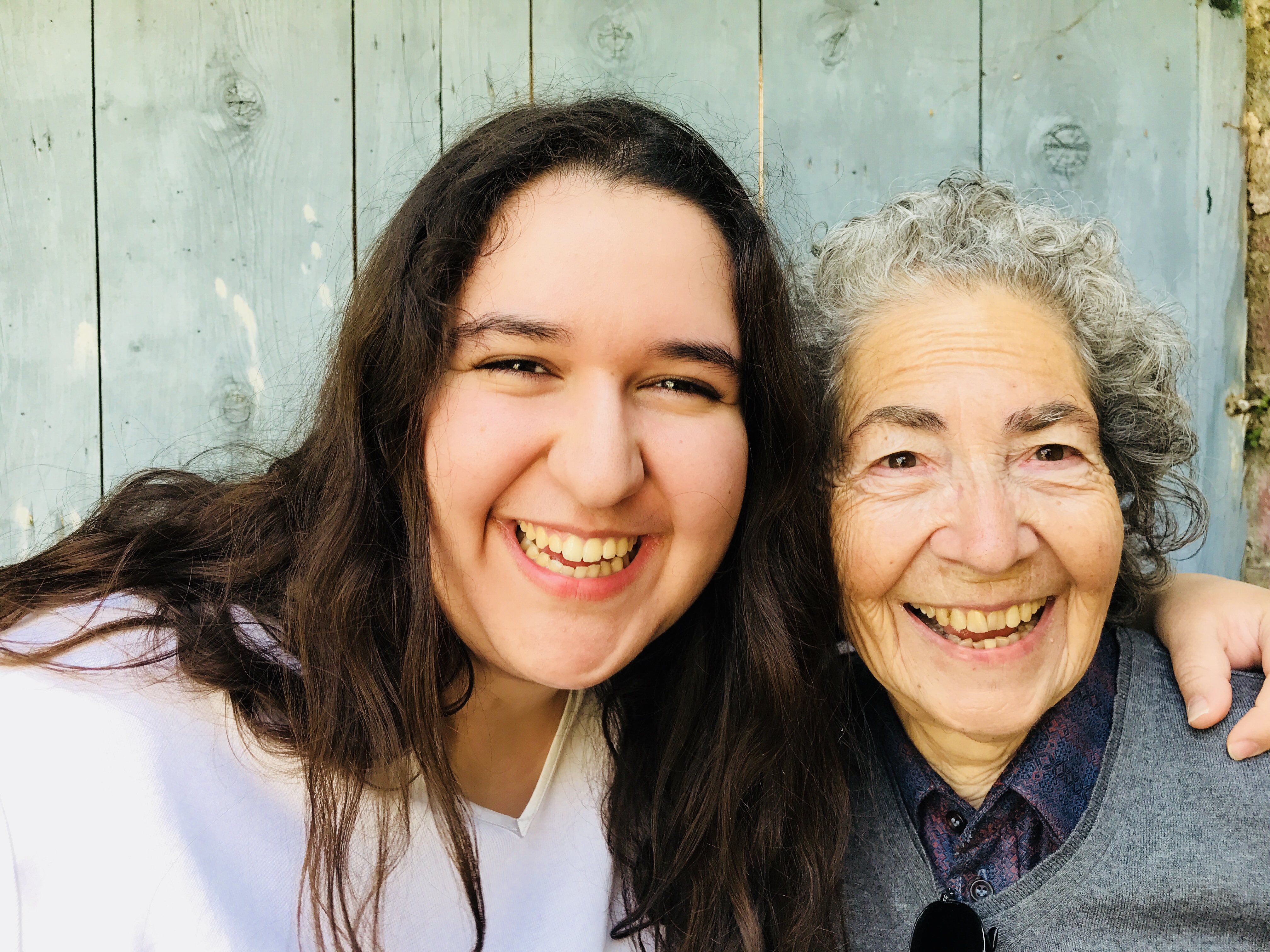
My grandmother (γιαγιά) and I write this blog-post together. It is her willingness to write with me that makes this both an exciting, and deeply meaningful entry for me. I usually try to abstain from using my blog as a diary, but this is different. We recorded parts of our visit at my other grandmother’s family home in the village of Καστόρι (Kastoreio) during Easter. I have asked my γιαγιά Sylvia to tell this story with me because she is one of the first narrators in my life. All throughout my childhood nights, I can follow her voice reciting my favourite bedtime tales which I made her repeat over and over again. There were so many stories that were so special told by her; a treat of childhood.
The more I grow up, I see her sink into herself. The older she gets the shorter, the frailer she becomes, the more she allows herself to be equal parts fearless and daring, fully sensitive and vulnerable; a better grandmother and storyteller.
Eating pizza in our Athens home after returning from our trip, I tell my grandma that the blog-post is almost ready for the internet. She replies with surprise: ‘What? The internet?’ It turns out that all this time that I had been telling her ‘we are writing something for the blog’, she was hearing for the ‘μπλόκ’ (block), which in Greek roughly translates into ‘notebook’. We laughed, and she agreed to have her writing posted online, even though it is, in her opinion, ‘terribly informal and descriptive’ and ‘meant for you to read!’ I hope you enjoy these moments of our Easter holidays- lost and found in intergenerational translation, caught between both our palms.
∗
Γιαγία
This year the plan was that the family would spend Easter at Kastoreio near Sparti with the rest: grandma, aunt, cousins. I would go a week earlier than all of them, and grandma Ermioni left before ten days to prepare the house, and to be there to greet us. But a tooth of mine ruined our schedule. The tooth hurt and had to be treated, my cheek was swollen. In this way, the days went by with pain and visits to the dentist.
However, the problem was soon fixed and we prepared to leave. We left today, Μεγάλη Πέμπτη, at one in the afternoon. The weather was good and with the company of the children, the journey was pleasant. Even Alice (the dog) didn’t ruin the trip, because the poor thing was sleeping the whole way on my lap.
A little outside Τρίπολη (Tripoli), stopping at a café, we had coffee and a lovely one hour break. We continued in a good mood. A little outside Σπάρτη (Sparti), there was a road to the right and one that went straight on, unfortunately without a sign. George decided to turn right: it was a mistake!!! We missed the beautiful Olympia Odos, and there began the narrow, uphill, winding road!!! You see, we didn’t know that we had begun ascending Taygetus!!!
We were passing through little villages with their signs (for us unknown places), and hoping that the village in sight on a far-off mountaintop was Καστόρι (Kastoreio). At this little village called Λουγκανίκος (Louganikos), we asked an old man if he could give us some directions, and he told us that we should simply keep going straight onwards and that after passing the 1st and 2nd village, we would find Kastoreio; we went through 3-4 villages and kept going.
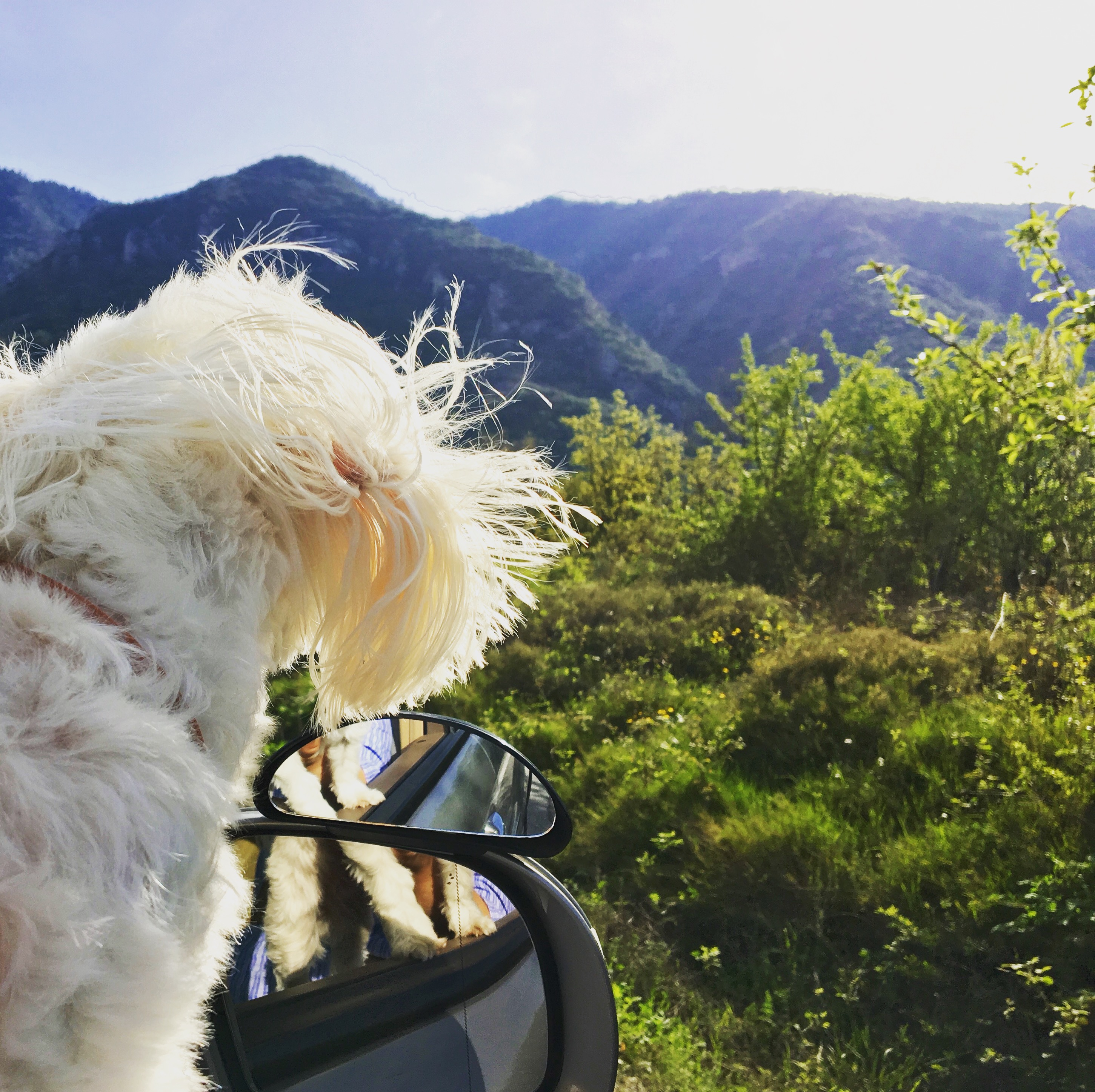
At the village Αγόριανη (Agoriani), hung up on the wall of its cemetery there was a sign advertising fresh pasta that was ‘locally crafted’. We laughed so much and joked a lot, and off we went to the next village: Γιοργίτσι (Giorgitsi), through which the road began descending. We had reached the top of Mount Taygetus. We were dizzy from all the turns in the road.
Thankfully, we began descending, but the road was winding and endless. We passed through Αλευρού (Alevrou)- another village- and kept going. Unfortunately, we could no longer spot Kastori in the distance. The road was winding and endless: would we ever reach our destination?? It was six in the evening when we saw the house (one of the last in the village), but for this reason, we saw it first up.
We arrived at the wrong end of the village! Thank god! Grandma Ermioni had fallen asleep in her chair waiting for us. Until she had treated us to some food, and we got to share our news, it was 7. The church bells rang, and she and I got ready for church. Tonight, we heard the gospel. During the 6th part, the priest came out holding Jesus on the cross. What a touching moment!!! We all bowed to him piously, and many brought flowers to his feet, and a wreath to his head.
We then heard the rest of the gospel about the sufferings of Christ and went home. We were really tired; we ate a little and had some tea. We all went to bed exhausted.
∗
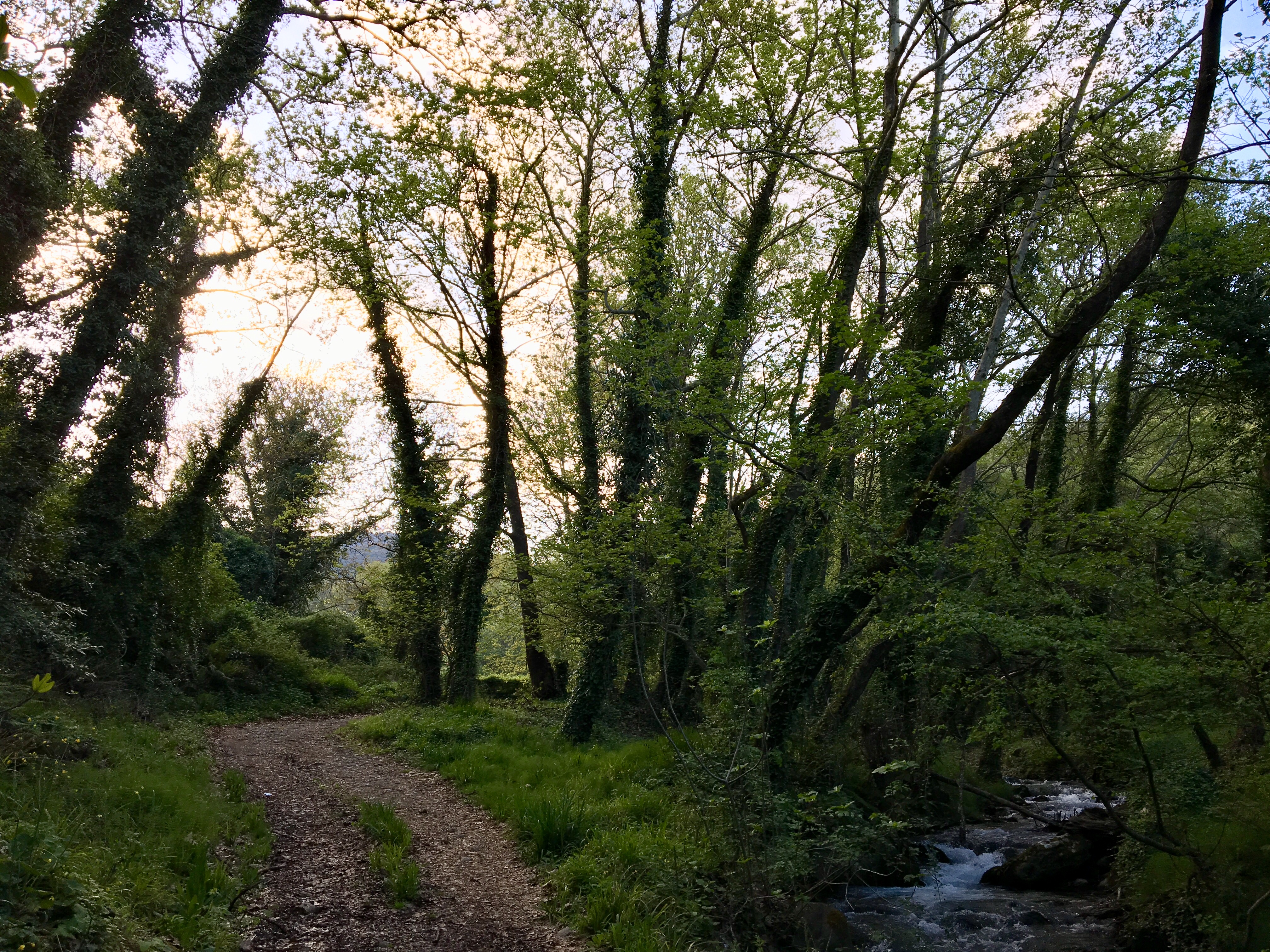
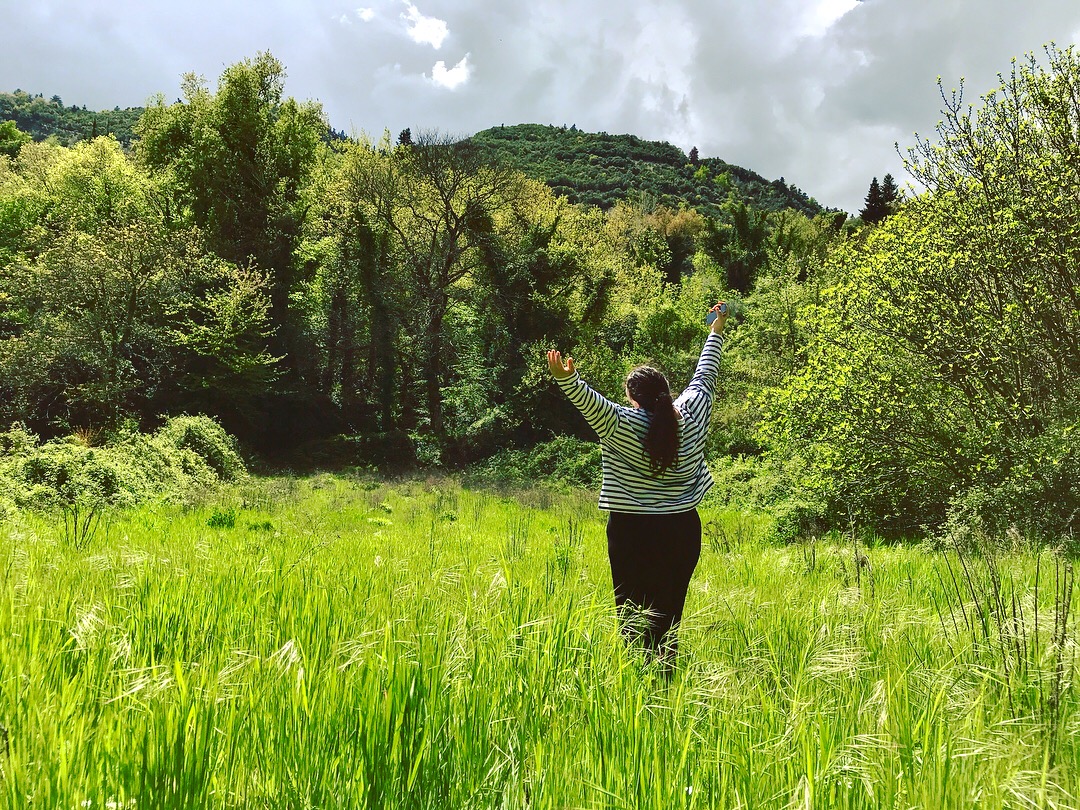
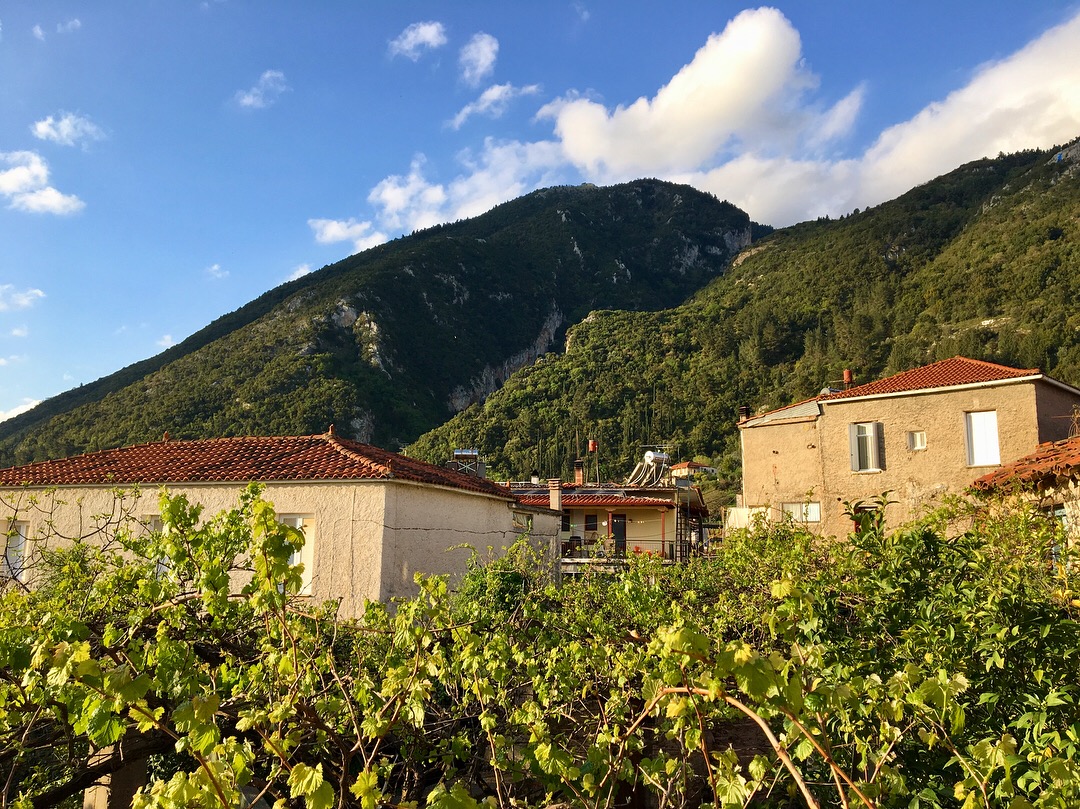
Rebecca Solnit makes the distinction between silence and quiet- the one is imposed on you, and the other you seek. After a long trip, I am finally breathing in the mountain air and updating my Instagram with pictures of green mountains bathed in sunlight. I have spent many Easters in this village as a child with my family: the house, γιαγιά Ermioni, and my memories are loud, and as I rest outside I feel the quiet; I feel quiet.
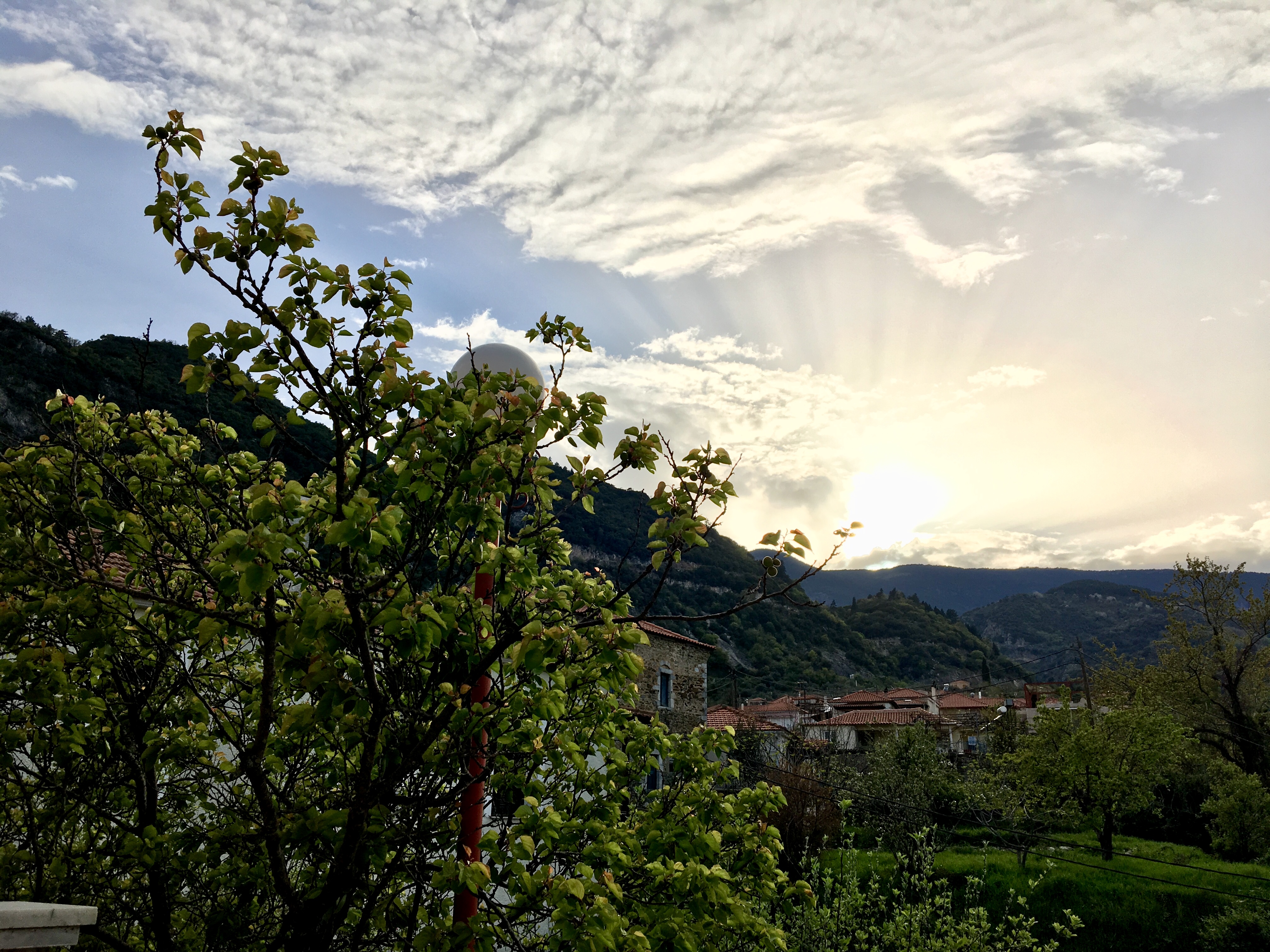
Sitting between cloudy blue mountains and the sun glazed green of the forest in the early hours, I am amongst my two grandmothers: the one gentle and sweet, and the other loving but loud, endlessly gesturing. Between cups of hot local mountain tea, I lapse into fruitless attempts to capture in writing or in a picture the essence of this place. As I’ve come here after five years, strange yet familiar to this place, I realize the impossibility of this. I tread the line between the identity of loss and newness, but this time I’m leaning more towards the latter, even in moments where I’m enveloped in my mother’s bulky jacket, sleeping on the bed we used to lie on together and read stories about Easter hens and golden eggs. Every family member has their own version of a story about this fluffy, brightly-coloured, patterned jumper, and when they ask me if I remember it being worn I say ‘Barely, but it’s very familiar and so warm.’
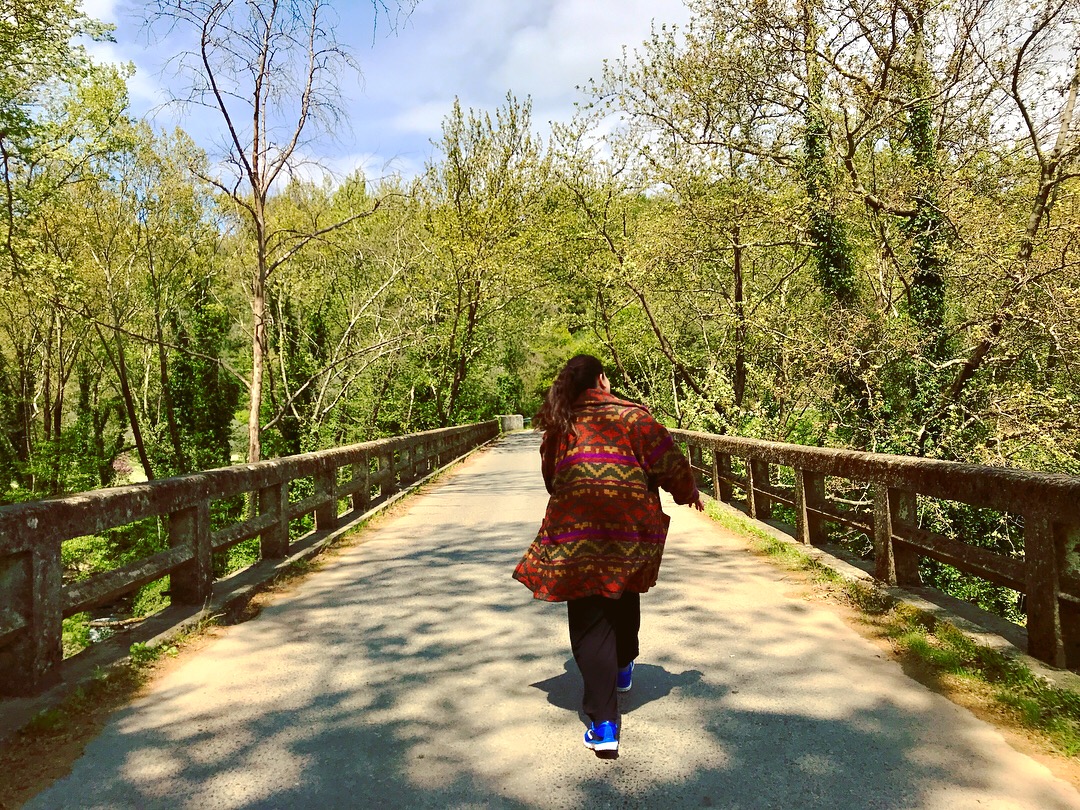
As my grandmother peels back the softened shell of boiled chestnuts, and I lie on the bed next to her and type notes on my phone, I’m very aware of the pain in my back that spreads to my legs- whatever pain was there is exacerbated by the extreme humidity of this place. I’m battling with the notion that being in physical pain impairs my ability to write, and not only in a physical sense. At times, there’s a certain feeling of fatigue that comes with being in physical pain, one that hides behind language adorned in a way that attempts to make processes bearable. This thought is uncomfortably reaffirmed as I’m trying to put down words stripped bare from personal meaning that hides behind phrases and metaphors. However, the very notion that physical pain in a sense impairs your creativity is categorically contradicted by my grandmother, who writes with honesty and ease; ‘to remember’, she says.
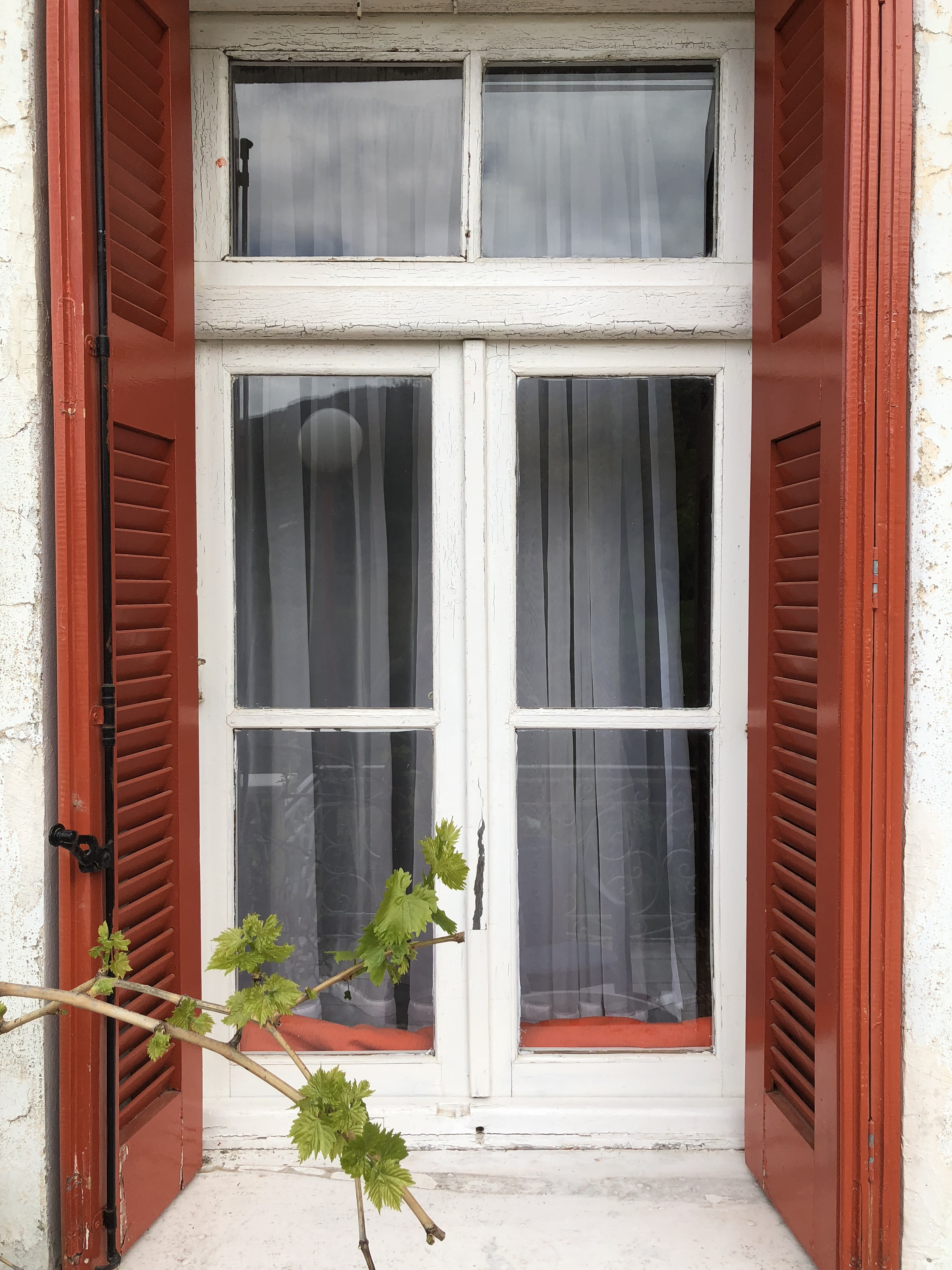
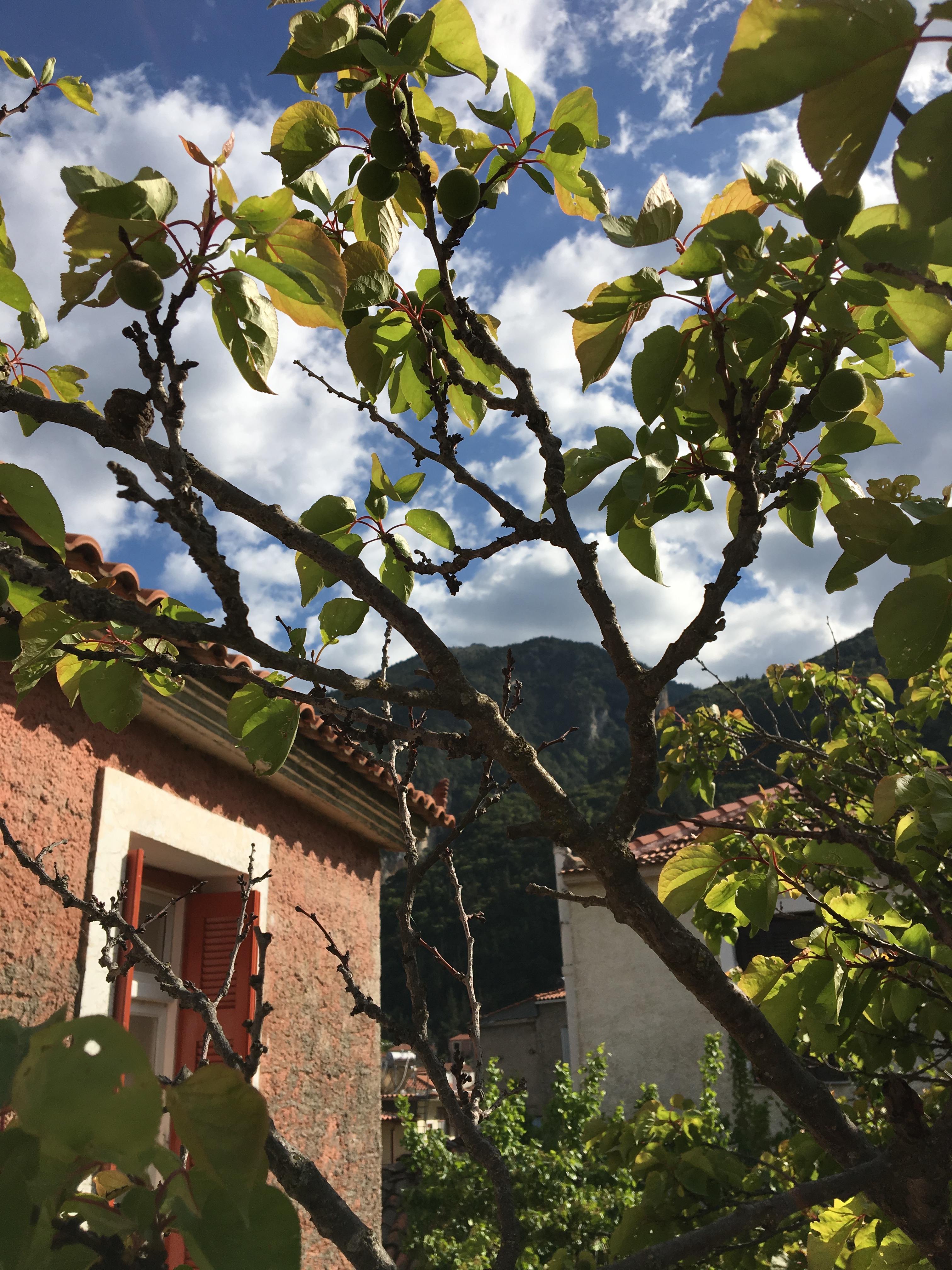
Honest writing: something that is so difficult when you’re constantly surrounded with people in a wooden house from 1860, that complains as you walk on its weak legs; you hold your breath between rare, uninterrupted thoughts. And yet, I am comforted by the fact that this place does not leave room for attractive words to complicate it: it renders them at once improbable and futile in the face of its cerulean mountains, and deep forests, jasmine and roses. It demands simplicity, giving it back in abundance.
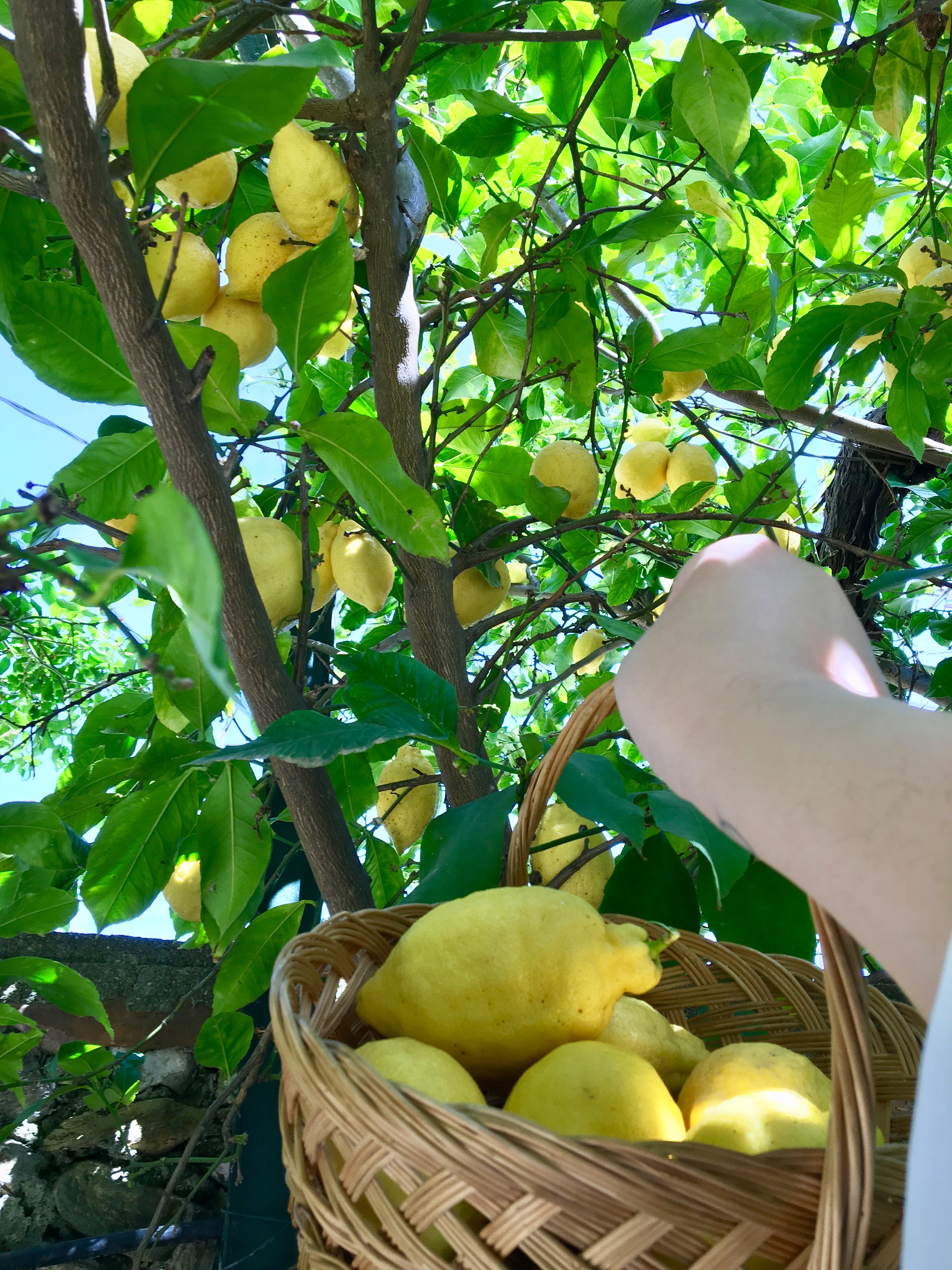
In noisy moments like this, my brother’s voice and my grandmother’s in an endless volume competition, I think that no one place can have a single face. Between the lemon trees and the creaking stairs, in the empty chicken coop that used have chickens and one rooster (only one), I see a place that turns its face away when I try to recognize it. To have ‘two faces’, in this sense, is not weighed-down with negative connotations. It is the shifting identities of people and houses, under different circumstances, that reveal the different aspects of their personality; people adapt, and places do, too. As my family has changed, my relationship with this house has too. With our many layers, we meet its own, and each one peels back the faces of the other. I realize that as we uncover our collected notions of a place and its significance, the faces that we knew it by converge, and we reach it with a new complexity that is more honest and familiar in its shifting identity.
I think of Maria Bello’s 2013 Modern Love column for the New York Times that she later turned into a book. It’s called ‘Coming Out as a Modern Family’. My cousin finds amusing how I write about experiences that were very ordinary in our shared childhood experience. I tell her how I see us as a modern family. I speak too fast. She smiles through the mirror. I guess the Greeklish explanations, the half-shaped ideas and foreign expressions are part of what I feel this creaking house to be: I have captured one of its essences.
∗
Γιαγιά- Μεγάλη Παρασκευή (Big Friday)
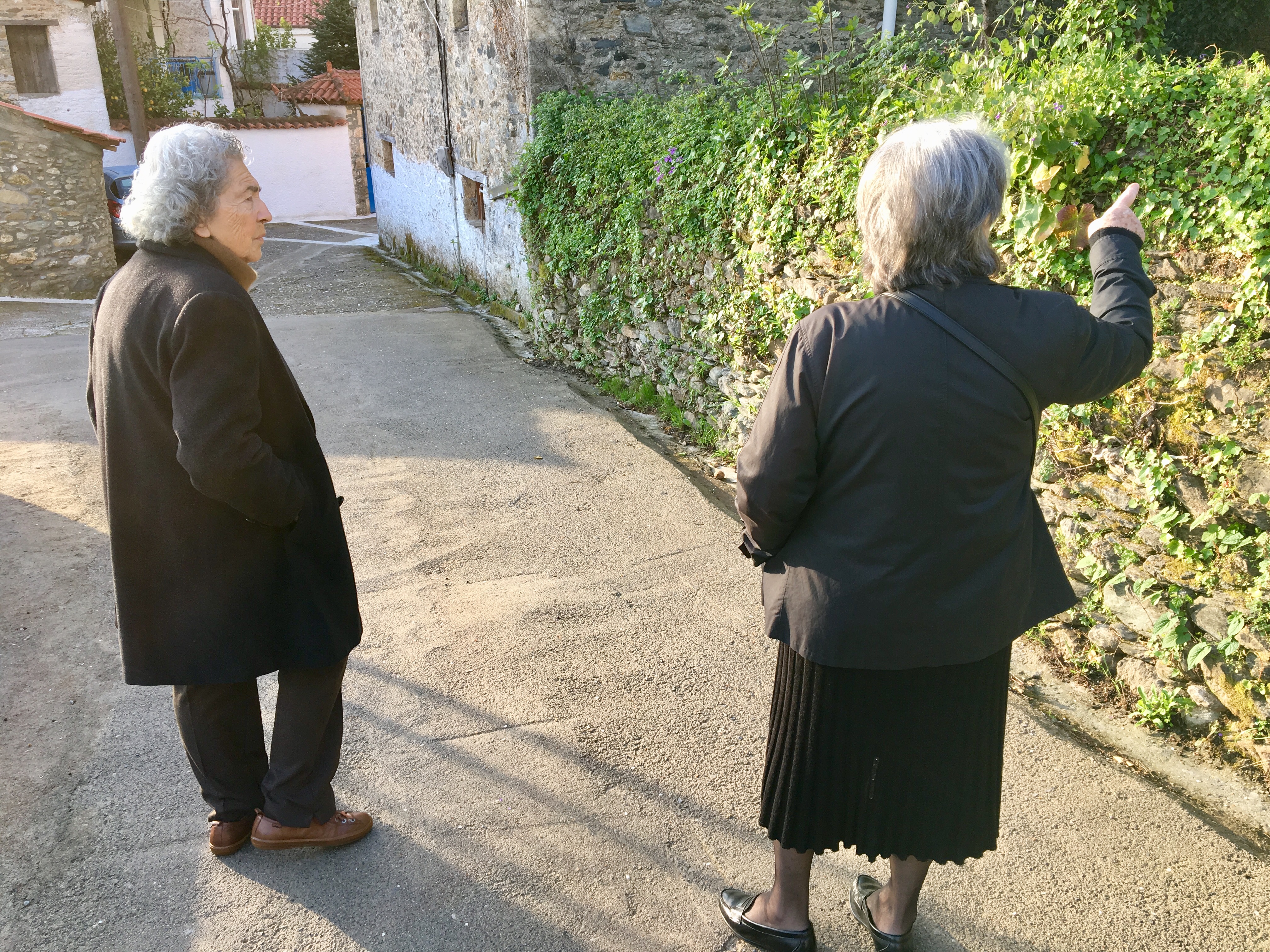
Melina said that she would write about today. I don’t want to take her turn- I’ll just say a few things about the sermon at church. There, in the morning during the sermon, the priest brought Jesus down from the cross, and wrapped him up in a double white sheet that was held up by four women, took the body of Christ on his shoulders, and placed him on the altar, where he will remain. All of this sermon is called “Pieta”. People were moved by it and many were crying- proof that they were really feeling it!!!
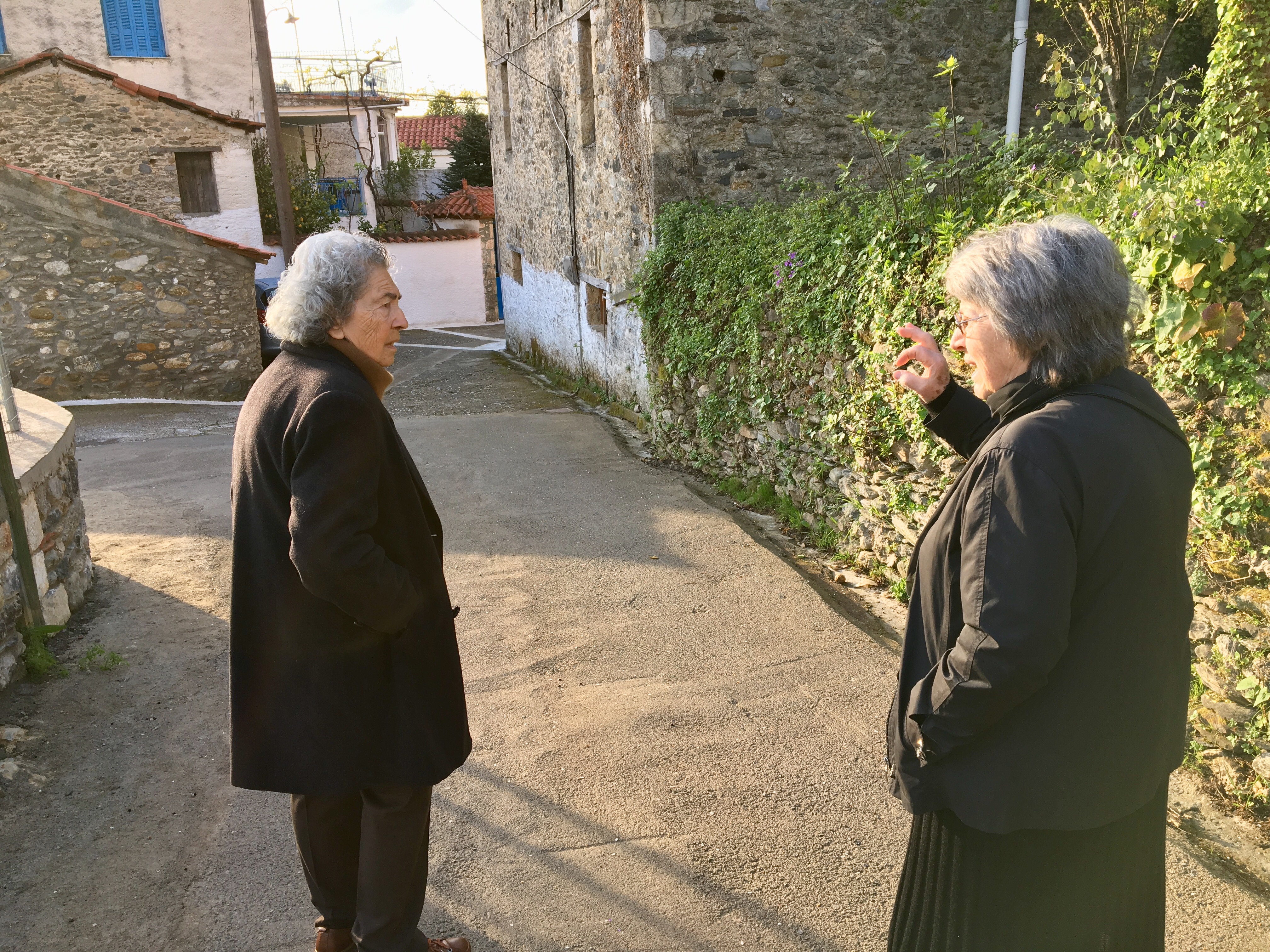
At night with another sermon, the priest moved the body of Christ on his shoulders and placed it in the epitaph which was adorned with flowers.
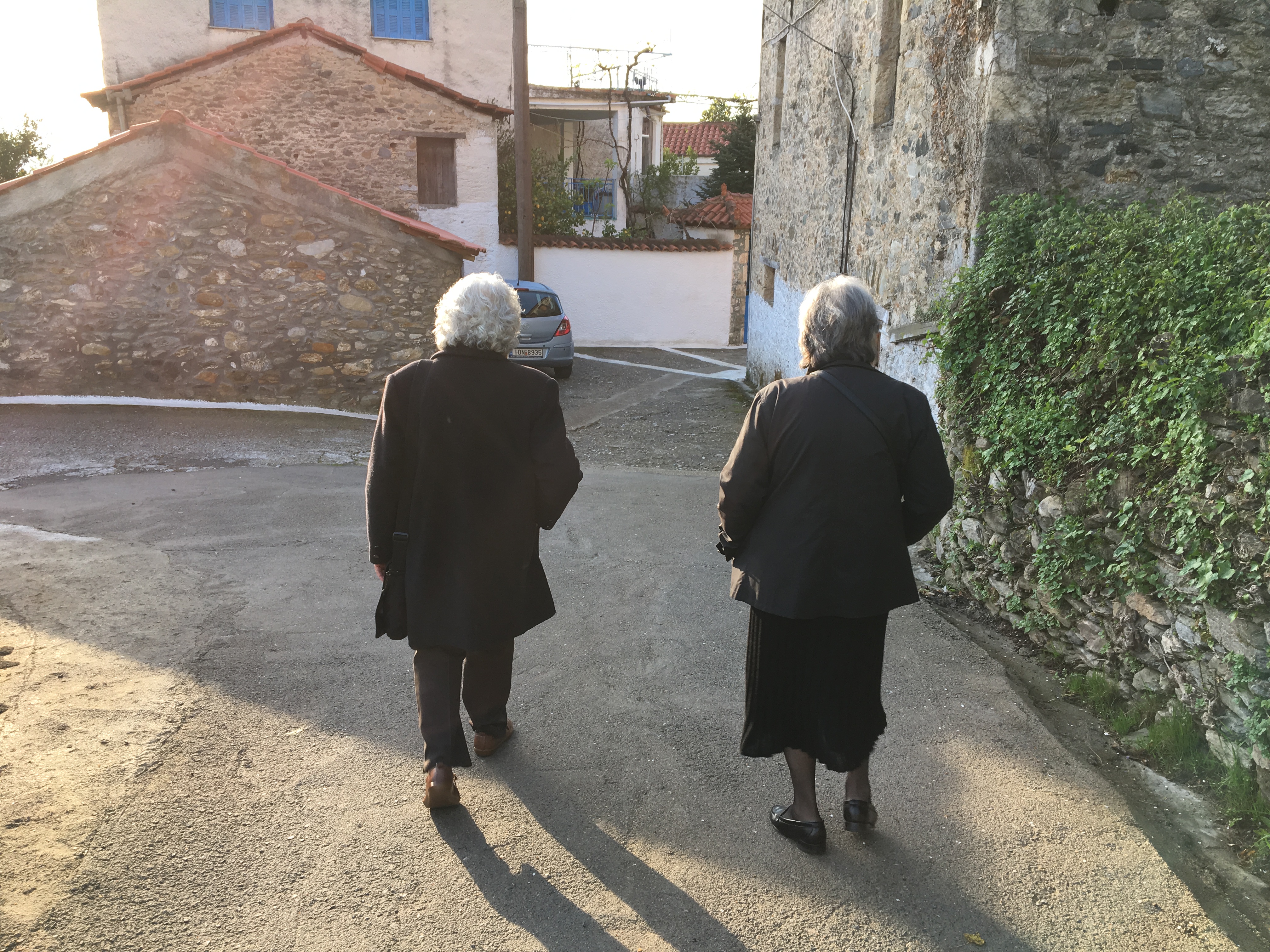
A choir of girls recited the eulogies and at eight, little girls holding baskets filled with flower petals decked the coffin. Later, there was no procession in the village because it was raining and the epitaph was only taken around the church, stopping at the entrance where people passed from under it in order to receive its blessing.
I was disappointed. And that because I wanted the whole procession to take place. I remember the narrow streets, winding like snakes, through which the epitaph would pass, all lit up with torches, looking beautiful from afar. I wanted to see this image again.
But it’s okay- maybe one day I’ll come back again…
∗
My grandma asks me to write about the Saturday of Greek Easter. ‘Put the moment down, you don’t know who will be here next year, or if we’ll have the same food on our table. It might not be poetic but it has value as a memory,’ she tells me. She’s right. How many moments are lost because we do not think they are ‘poetic’ enough to write about? And, at the end of the day, whatever you write is like a warm, well-made bed when it is down on paper. ‘To remember’, she says. I think about her words, and I write.
Saturday of Greek Easter at the village means that for the entire day, or at the very least, after communion in the morning, the house is flooded with smells of food: mainly, μαγειρίτσα (magiritsa), a thick soup of which I’ll spare the details out of consideration for the vegetarians amongst you. Goat with olive oil and fresh oregano leaves as well as lemon-roasted potatoes are also being prepared for Easter lunch on Sunday- a big deal, even in years when things are not going so well.
This year, I went to church with my two grandmothers, which made me the favourite grandchild. I did not peel potatoes when asked to, which made me drop on their list. Church bells echo through the village during the day, but especially after ten-thirty at night, interrupted by the sporadic popping and whistling of fireworks. Perhaps it is worth noting that as I’m writing this, my entire family is trying to figure out whether there is a marten moving in the attic- if that doesn’t capture the essence of this place, I don’t know what will.
At night we sit around the old buzzing TV, watching El Greco, and waiting to eat μαγειρίτσα. Half of us go to church at eleven thirty at night, and the other half (my dad and I), stay at home. We say ‘Χρηστός Ανέστη’, and respond with ‘Αληθώς’, and in the case of my dad ‘και του χρόνου!’ My cousin makes a comment the next day as she is applying her makeup in front of the wooden dressing table mirror with the candles and towering faux flowers. She says: ‘It was such a sweet moment, the way we were all sat around the old television, watching a movie and eating soup. When you think about it, the moment becomes something different, under a different light. But it was sweet.’ I think about my memories in the light of this place; the old cottage in the woods, hazelnut coffee, weeds and grass under our feet, red Easter eggs, and quick showers before the warm water runs out. The house rings with footsteps. It smells the same as before. I am grateful.

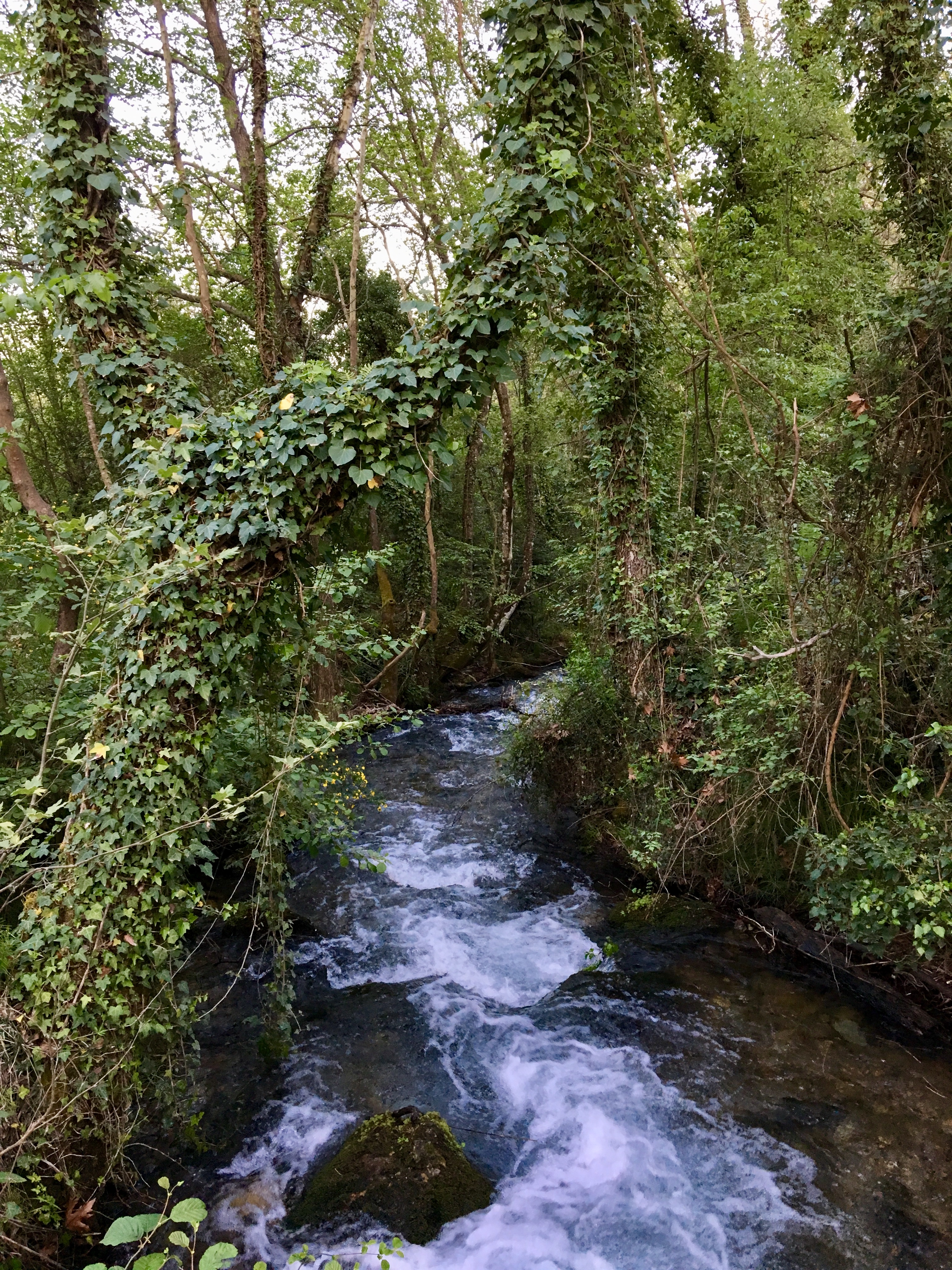
Easter Sunday, we eat goat in the warm breeze of the front porch. I keep the camera in its case and leave my phone to charge. We move to the backyard after desert, following the movement of the sunlight. Between clinking cutlery, laughter, patchy feminist conversations, and pauses to appreciate the view and the food, I am grounded by the smell of washed hair hugged by sunlight. I write from inside the house, anticipating a walk by the river. ‘Who wants coffee?’ comes from outside. Hearing their voices, I think of how strange and wonderful it is that people can come back to a place after being struck with grief, and rebuild bridges of celebration amongst one another. As I write this, I feel that my grandmother and I have captured the essence of this place in one warm, sunny, well-fed way. Καλό Πάσχα!
 MELINA SPANOUDI